Volcanoes
Lava Academy Glossary: Terms in Geology and Volcanology, Part Two
Welcome again to the Lava Academy by Lava Show! If you’re reading our content about Icelandic volcanoes or attending our award-winning Lava Show, you’ve probably come across terms like “magma chamber,” “fissure eruption,” or “seismicity.” But what do they all mean?
In Part One of this glossary, we broke down some of the most important geology and volcanology terms in simple language, so you could understand the science behind the volcanic activity that shapes our island. In this follow-up, we’re digging a little deeper (literally) into the structures, signals, and specialists that help us understand volcanic activity in Iceland.
Glossary of Geology and Volcanology Terms
Subsurface Structures: Where Magma Lives and Moves
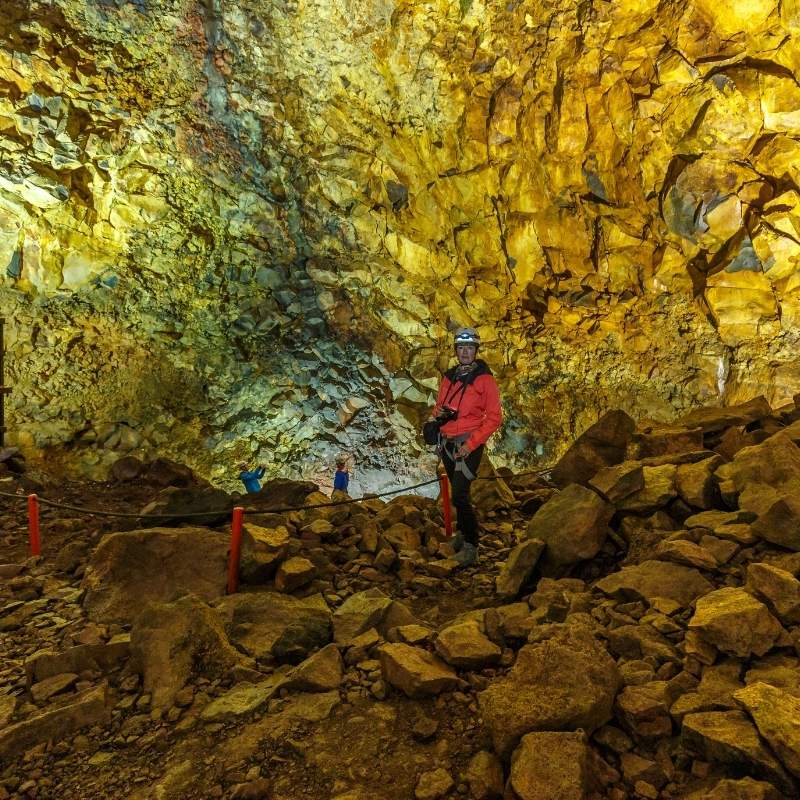
Inside the Þríhnjúkagígar magma chamber—an enormous, hollow volcanic cavity where visitors can descend into the heart of an extinct volcano and witness its vibrant geological formations up close.
Magma Chamber
A magma chamber is a reservoir beneath the Earth’s surface where molten rock (magma) is stored. It is a long-lived, complex shaped region of partially melted rock, created and fed by sills and dikes (see definitions below) that form the heart of bigger volcanoes.
Why it matters: Changes in pressure or volume inside a magma chamber are often what drive volcanic eruptions.
Magma Pipe (Conduit)
Aa magma pipe, also called a conduit, is the pathway magma takes as it rises toward the surface from a magma chamber. It connects deeper magma storage zones to a volcano’s vent.
Why it matters: The shape and openness of this “plumbing system” can influence whether an eruption is explosive or gentle.
Dike
A dike is a sheet of magma that cuts vertically (or steeply) through existing rock layers. It forces its way upward, often fracturing the surrounding rock as it goes. It can lead to the surface or to a magma chamber.
Why it matters: Dike creation and movement is a major cause of earthquake swarms in volcanic regions and is often a key signal that magma is on the move. (For example, the earthquakes leading up to an eruption at Svartsengi on Reykjanes peninsula are from dikes.)
Sill
A sill is similar to a dike, but instead of cutting across layers, it spreads horizontally between them. It can sometimes be used to store magma in the short-term.
Why it matters: Sills can cause the ground above them to bulge or uplift, which scientists can measure. (For example, the magma at Svartsengi system on Reykjanes is stored in the subsurface in a sill most likely.)
Intrusion: (noun)
Molten rock (magma) that has pushed into existing rock beneath the Earth’s surface and then cooled and solidified there; (verb) the act of sills, dikes, and other magma bodies being created and moving in the subsurface.
Why it matters: Not all magma movement leads to eruptions, but it can still cause earthquakes and ground deformation (definitions below).
Related terms for deeper knowledge: laccolith, lopolith, and magma lens are all magma storage containers that could be found under Iceland´s volcanoes.
Monitoring the Earth: How We Detect Volcanic Activity
Earthquake
An earthquake is the sudden release of energy in the Earth’s crust, creating seismic waves. In volcanic areas, many earthquakes are caused by magma forcing its way through rock.
Why it matters: Clusters of earthquakes can be one of the earliest signs that a volcanic system is becoming active.
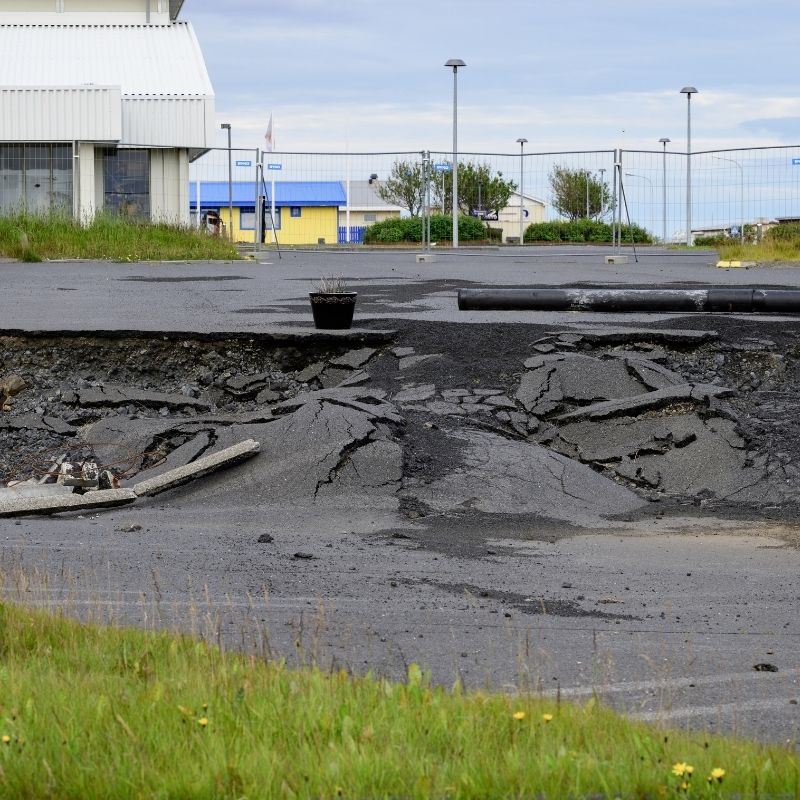
Earthquake damage in Grindavík, Iceland, where seismic activity has fractured roads and reshaped the ground surface.
Seismicity
Refers to the overall pattern and frequency of earthquakes in a specific area over time. For example, “an increase in seismicity led volcanologists to hypothesize that magma was collecting in the subsurface.”
Why it matters: Scientists track changes in seismicity to understand whether magma is moving, and whether an eruption might be approaching. Increased seismic activity is often linked to volcanic unrest.
Earthquake Swarm
An earthquake swarm is a cluster of many small earthquakes occurring in a short period, without one main large quake.
Why it matters: Swarms are one of the clearest signs of magma forcing its way through rock, and the location of the swarm can help scientists pinpoint where magma is moving.
Ground Deformation
Describes changes in the Earth’s surface, such as uplift, sinking, or horizontal movement, caused by activity below ground. Inflation is the scientific term for the ground rising up, and deflation is the term for it sinking or sagging down.
Why it matters: Even tiny movements (sometimes just millimeters) can indicate that magma is accumulating or shifting underground.
Volcanic Unrest
Volcanic unrest refers to a period of increased activity—like earthquakes, gas emissions, or deformation—without a confirmed eruption. Example: Katla volcano.
Why it matters: It’s the “something is happening” phase that often makes headlines.
Eruption Terminology
Effusive eruption
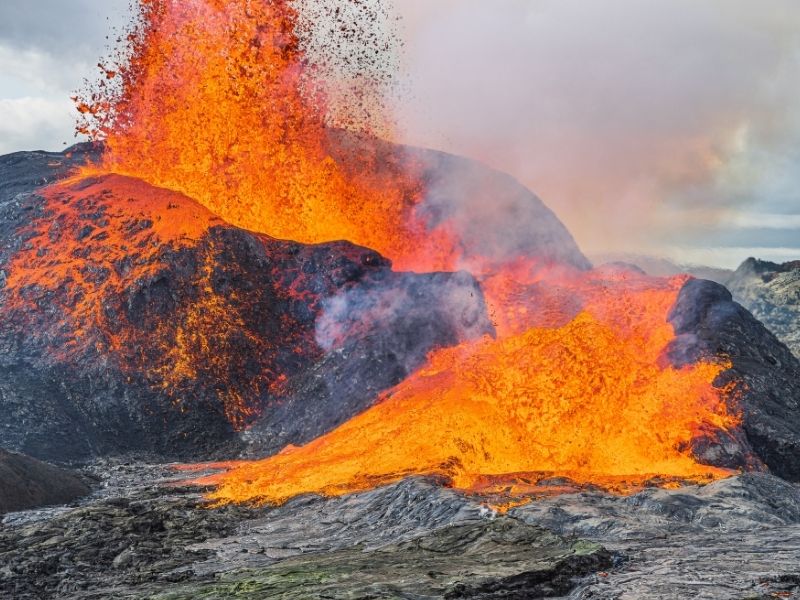
A type of volcanic eruption where low-viscosity (runny) magma rises to the surface and releases gas easily, resulting in a steady, relatively calm outpouring of lava.T hese eruptions commonly produce extensive lava flows and fountains, creating shield volcanoes or large lava fields. The recent eruptions on the Reykjanes Peninsula in Iceland have all been effusive eruptions.
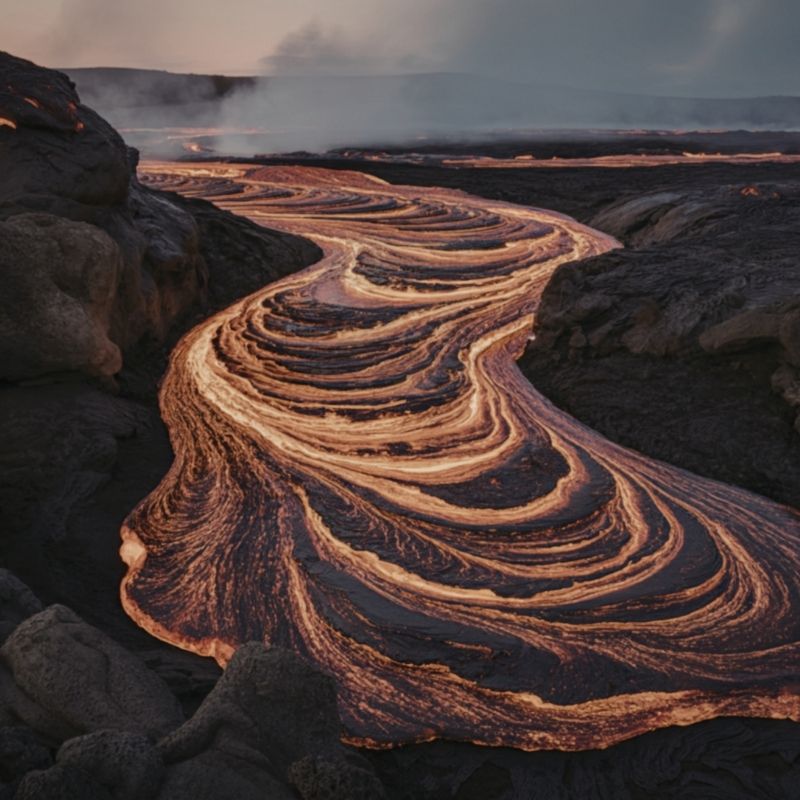
An effusive lava flow forming ropy pāhoehoe patterns as molten rock moves steadily across the landscape, a common and relatively gentle eruption style in Iceland.
Why it matters: this is the most common eruption type in Iceland, meaning most eruptions are less dangerous than people sometimes envision.
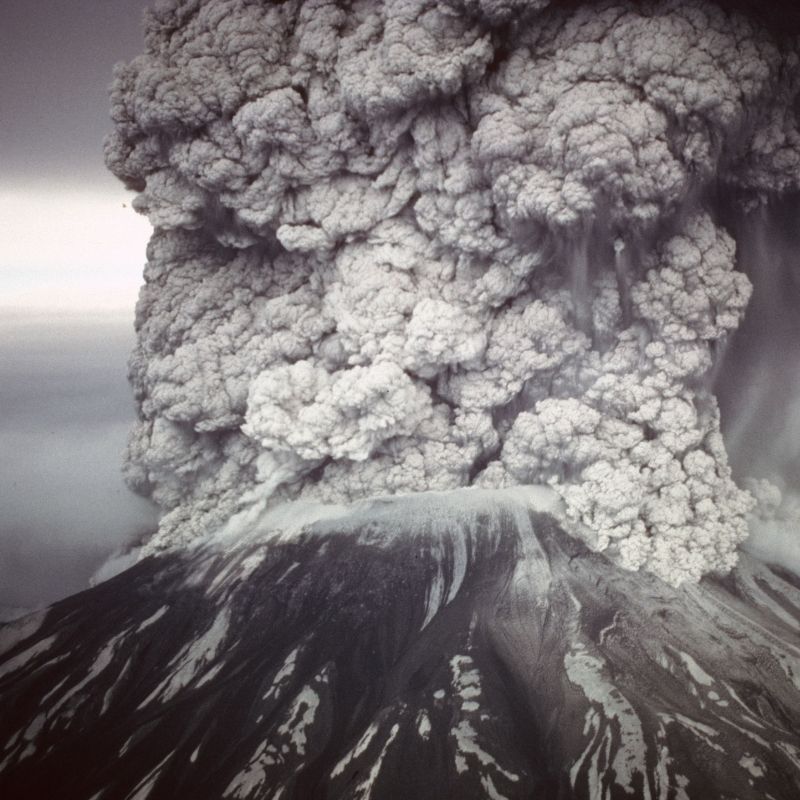
The explosive eruption of Mount St. Helens, where gas-rich magma fragmented into ash and debris, creating a towering eruption column and demonstrating the power of high-energy volcanic events.
Explosive eruption
A type of volcanic eruption that is a violent, high-energy event where viscous (thick) magma traps gas builds up immense pressure until it blasts fragmented lava, ash, and pumice into the atmosphere. These eruptions often feature tall eruption columns and dangerous pyroclastic flows, Examples of explosive eruptions include the Eyjafjallajökull eruption in Iceland in 2010, and the eruption of St. Mount Helens in Alaska in 1980.
Why it matters: these are much less common in Iceland, although can happen with the volcanoes that sit under glaciers, as the glacial water mixes with magma to build up gas and pressure.
Tephra
Also called ejecta, this refers to all solid material ejected during an eruption (ash, rock fragments, etc.). For comparison, lava is not solid, and is not tephra.
Why it matters: Even in non-explosive systems, tephra can erupt and affect air travel, infrastructure, and air quality.
Lava tongue: a lava tongue, or lava lobe
A a relatively short, narrow flow of lava, typically 2–3 km in length at maximum, that acts as a lobe or extension of a larger volcanic eruption.
Why it matters: These flows, often associated with effusive Icelandic fissure eruptions, can thicken, move quickly, and pose threats to infrastructure.
People Behind the Science: Who Does What?
In Part One of the glossary, we discussed the difference between a geologist and a volcanologist. But in Iceland, there are other jobs that play key roles during earthquakes and eruptions.
Natural Hazards
Expert: this expert focuses on assessing and managing risks from events like volcanic eruptions, earthquakes, floods, and landslides, and can have a scientific and/or engineering background.
What’s the difference? While a volcanologist studies how volcanoes work, a natural hazards expert focuses on what those processes mean for people—risk levels, safety planning, and real-world impact.
A scientist who studies the Earth using physical measurements, like sound waves, gravity, and magnetism, to understand what’s happening beneath the surface. A seismologist is a type of geophysicist who studies earthquakes and seismic data in real-time.
What’s the difference? While a geologist studies the surface data, history, analogs, and context of a volcanic system, a geophysicist and seismologist are the specialists who process data of complex tools to understand and predict the shape, size, and movement of unseen rocks and magma.
Listen to the Lava Show Academy Podcast on how scientists monitor geological activity in Iceland
Why did we expand the glossary?
As your Lava Academy education expands, so too should your knowledge of volcano concepts and terms. Whether you are preparing for your visit to the Lava Show, reading a news article about an erupting volcano, or entertaining your friends at a party, this terminology will help you make sense of the incredible geologic activity you will see in Iceland and throughout the world everyday.
Frequently Asked Questions About Geology and Volcanology Terms
What is a magma chamber?
A magma chamber is a reservoir beneath Earth’s surface where partially molten rock is stored. Changes in its pressure or volume can help drive volcanic activity and eruptions.
What is a volcanic conduit?
A volcanic conduit, sometimes called a magma pipe, is a pathway through which magma travels from an underground storage area toward a volcano’s vent. Its shape and openness can influence how a volcano erupts.
What is a dike?
A dike is a sheet of magma that cuts vertically or steeply through existing rock. As it forces its way upward, it can fracture the surrounding rock and generate earthquakes.
What is a sill?
A sill is a sheet of magma that spreads horizontally between existing rock layers. As magma accumulates, it may cause the ground above it to rise or bulge.
What is the difference between a dike and a sill?
A dike cuts across existing rock layers, usually vertically or at a steep angle. A sill spreads between rock layers, typically in a more horizontal direction.
What is a magmatic intrusion?
A magmatic intrusion occurs when magma pushes into existing rock beneath Earth’s surface. The term can describe both the movement of magma and the underground body that forms when the magma cools and solidifies.
Does underground magma movement always cause an eruption?
No. Magma can move through dikes, sills and other underground structures without reaching the surface. Even when no eruption occurs, this movement may cause earthquakes and ground deformation.
What is seismicity?
Seismicity describes the frequency, distribution and pattern of earthquakes in a particular area over time. Scientists monitor changes in seismicity to identify possible magma movement and volcanic unrest.
What is an earthquake swarm?
An earthquake swarm is a cluster of many earthquakes occurring within a relatively short period without one dominant main shock. In volcanic regions, swarms may indicate that magma is forcing its way through underground rock.
What is ground deformation?
Ground deformation is a change in Earth’s surface caused by activity underground. It can include uplift, sinking or horizontal movement and may indicate that magma is accumulating or shifting.
What do inflation and deflation mean in volcanology?
Inflation occurs when the ground rises as pressure or magma builds beneath the surface. Deflation happens when the ground sinks or sags, often because pressure decreases or magma moves elsewhere.
What is volcanic unrest?
Volcanic unrest is a period of increased activity—such as earthquakes, gas emissions or ground deformation—without a confirmed eruption. It means that something is changing within the volcanic system, but it does not guarantee an eruption.
What is an effusive eruption?
An effusive eruption occurs when relatively fluid magma reaches the surface and releases gas easily. It usually produces lava fountains, flowing lava and extensive lava fields rather than a major explosion.
What is an explosive eruption?
An explosive eruption happens when gas becomes trapped in thick magma and pressure builds beneath the surface. When released, it can violently eject ash, pumice, rock fragments and volcanic gases.
What is tephra?
Tephra is the collective term for solid material thrown from a volcano during an eruption. It includes ash, pumice and larger rock fragments. Flowing molten lava is not classified as tephra.
Can tephra affect areas far from a volcano?
Yes. Fine volcanic ash can travel great distances and affect air quality, infrastructure, agriculture and aviation—even far beyond the eruption site.
What is a lava tongue?
A lava tongue, or lava lobe, is a relatively narrow extension of a larger lava flow. These flows can advance, thicken and threaten roads, buildings and other infrastructure.
How do scientists monitor volcanic activity?
Scientists track earthquakes, ground movement, gas emissions and other physical changes. They use tools such as seismometers, GPS instruments and satellite measurements to understand what is happening below the surface.
What is the difference between a geologist, geophysicist and seismologist?
A geologist studies Earth’s materials, structures and history. A geophysicist uses physical measurements—such as seismic waves, gravity and magnetism—to investigate processes below the surface. A seismologist specializes in earthquakes and seismic data.
What does a natural hazards expert do?
A natural hazards expert assesses how events such as volcanic eruptions, earthquakes, floods and landslides could affect people and infrastructure. Their work supports risk evaluation, emergency planning and public safety.
Can I learn about these volcanic processes at Lava Show?
Yes. At Lava Show in Reykjavík and Vík, geology comes alive through engaging storytelling and a real molten-lava pour. Visitors can feel the heat, hear the lava crackle and see how molten rock behaves as it cools—all in a safe, controlled environment.
See real molten lava
At Lava Show, these concepts come to life in the most literal way, through a steaming, hot lava pour, engaging storytelling, and hands-on learning. Whether you’re a curious traveler or an aspiring scientist, understanding the language of volcanoes offers a deeper appreciation for the powerful natural forces shaping our world. At Lava Show you can experience real molten safelly flowing indoors in our locations in Reykjavik or Vík.
Discover the Lava Academy Podcast where you get in-depth conversation foscusing on the wonderful world of geology, volcanos and of course lava!
This article is written by geologist Jessica Poteet. Listen to the interview with her on the Lava Academy Podcast.