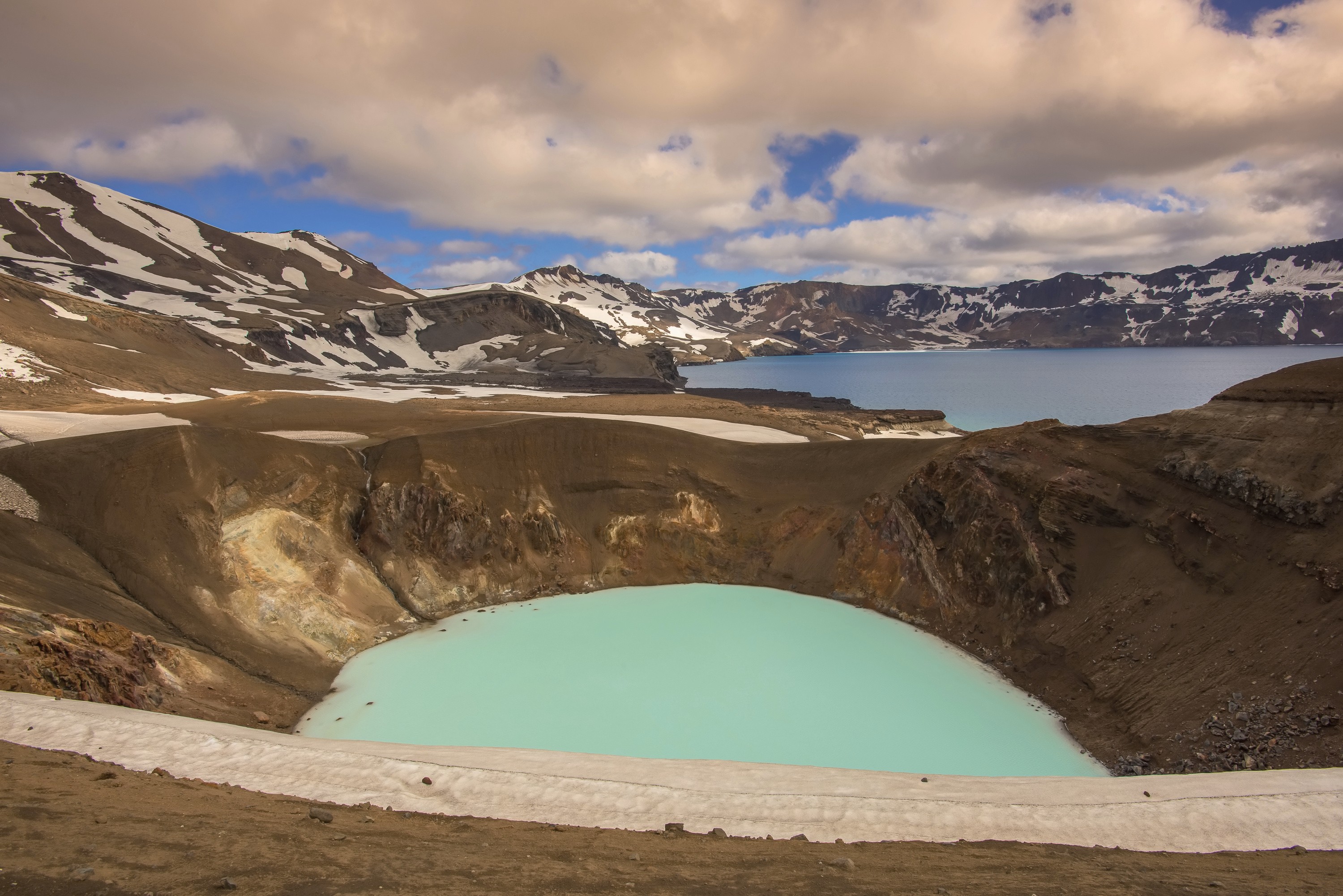
Travel Guides
Where to See Real Lava in Iceland
Discover where you can safely experience real molten lava in Iceland—from volcanic eruptions and fresh lava fields to the world’s only live lava show.
If you’re planning a trip to Iceland, seeing real lava is probably high on your bucket list. The country’s volcanic landscapes are among the most spectacular on Earth, and thanks to recent eruptions, interest in Iceland’s volcanoes has never been greater.
But many visitors quickly discover an important question:
Can you actually see flowing lava in Iceland?
The answer is yes—but it depends on when you visit, where you go and how you define “seeing lava.”
This guide explains the different ways to experience real lava in Iceland and helps you decide which option is right for your visit.

Visitors watch an active volcanic eruption in Iceland from a designated viewing area, illustrating the rare opportunity—and unpredictability—of seeing flowing lava in nature.
Can You See Flowing Lava in Iceland?
Unlike waterfalls or glaciers, flowing lava is not a permanent attraction.
Active eruptions occur unpredictably. Some last only a few days, while others continue for months. Many happen in remote locations that are difficult—or even impossible—to access safely.
In recent years, Iceland has experienced several eruptions on the Reykjanes Peninsula, drawing visitors from around the world. However, access has often changed at short notice due to volcanic gases, unstable ground and safety concerns.
Because volcanic eruptions cannot be scheduled, there is never a guarantee that visitors will be able to see flowing lava during their trip.
Visiting an Active Volcano during an eruption
If an eruption is taking place during your visit, witnessing flowing lava in nature can be one of the most unforgettable experiences imaginable.
However, active volcanoes also present significant risks.
Visitors should always:
Follow official advice from Icelandic authorities.
Respect all trail closures.
Never cross safety barriers.
Be aware of volcanic gas pollution.
Prepare for long hikes over rough terrain.
Expect conditions to change without notice.
Even when an eruption is active, there is no guarantee that lava will be visible from public viewing areas. Put safety first, before you embark on a trip to an active eruption, please read and follow the advice given on the Safe Travel Website.
Exploring Iceland’s Lava Fields
Even if there isn’t an eruption during your visit, you’ll find evidence of Iceland’s volcanic past almost everywhere.
Some of the country’s most famous lava landscapes include:
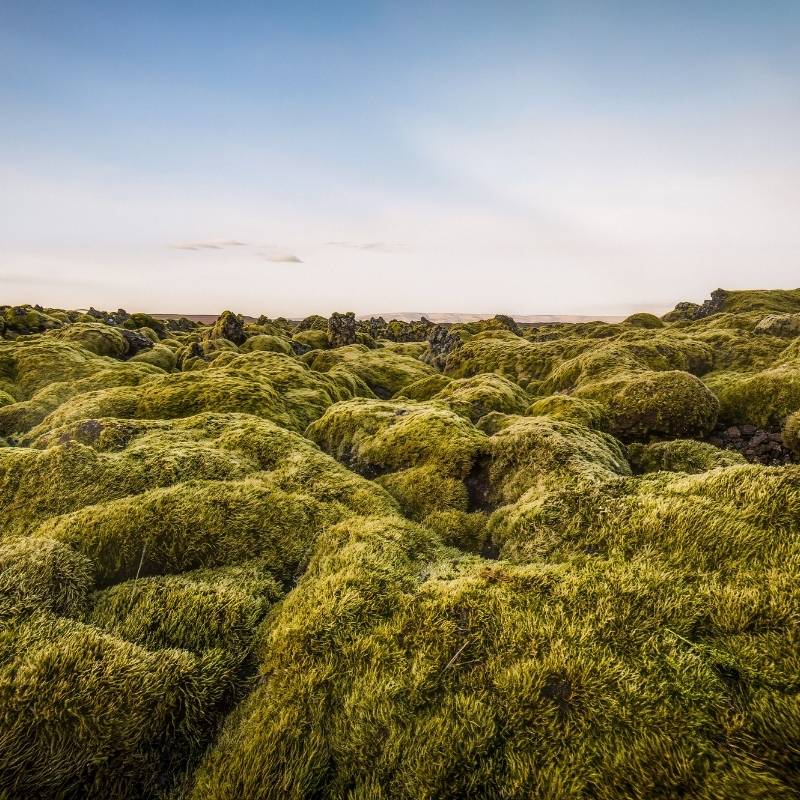
The moss-covered Eldhraun lava field in South Iceland, formed by the catastrophic Laki eruption of 1783–1784, is one of the world’s largest and most remarkable volcanic landscapes.
Eldhraun Lava Field
Created during the devastating Laki eruption of 1783–1784, Eldhraun is one of the largest lava fields on Earth. Today, its moss-covered landscape looks almost otherworldly.
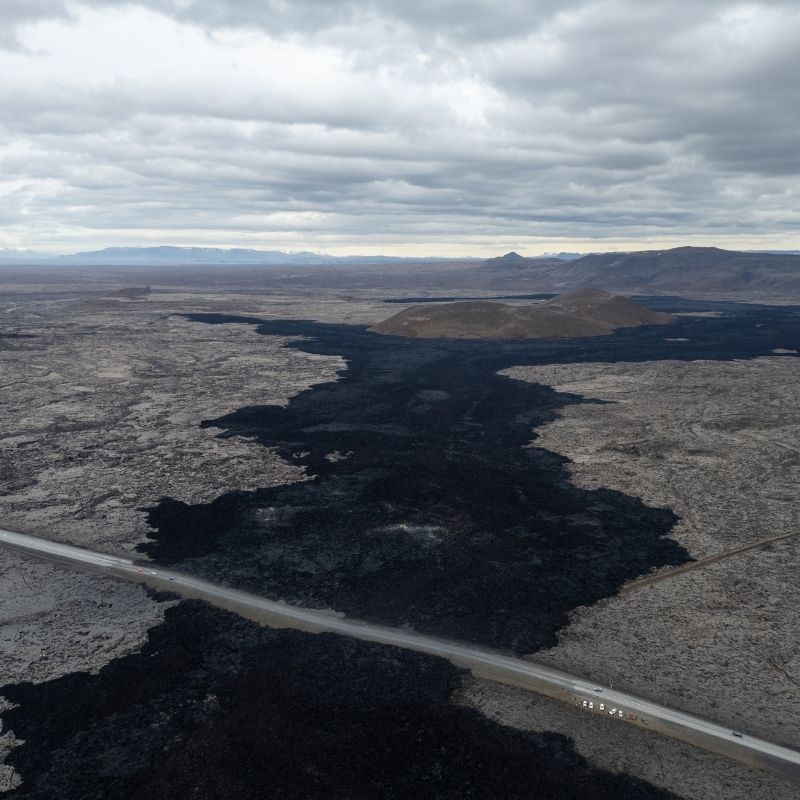
A fresh lava field on Iceland’s Reykjanes Peninsula, formed during the recent volcanic eruptions that transformed the landscape and attracted visitors from around the world.
Reykjanes Peninsula
The recent eruptions on the Reykjanes peninsula have created extensive new lava fields that visitors can often see from roads or designated hiking trails, depending on current safety conditions.
Important: never walk on a new lava field!
Fresh lava fields can remain dangerously hot for years after an eruption. Their sharp, uneven surface increases the risk of injury, while hidden cracks and thin crusts may conceal extremely hot rock or still-molten lava beneath. Always follow marked trails and local safety advice when exploring volcanic areas.

Þingvellir National Park showcases Iceland’s volcanic origins, where ancient lava fields and the dramatic rift valley reveal the powerful geological forces that have shaped the island for thousands of years.
Þingvellir National Park
Although best known for the meeting of tectonic plates, Þingvellir is also home to extensive lava formations created by ancient eruptions.
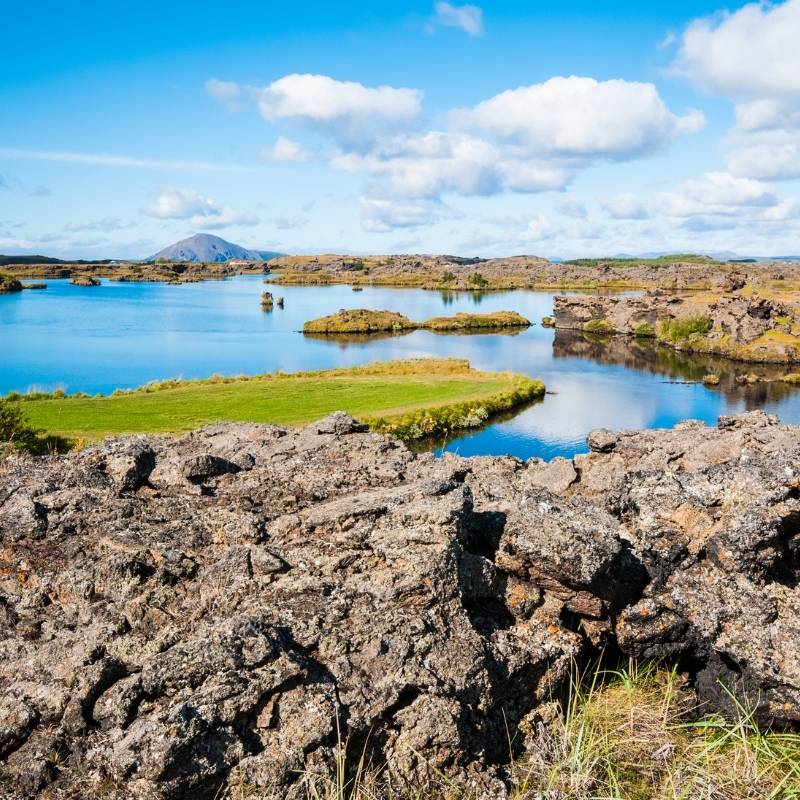
Lake Mývatn in North Iceland is surrounded by lava fields, volcanic craters and unique geological formations, making it one of the country’s most spectacular volcanic landscapes.
Lake Mývatn
Lake Mývatn in Northern Iceland offers remarkable volcanic scenery, including lava pillars, craters and young lava fields formed thousands of years ago.
These locations showcase the long-term effects of volcanic eruptions, but none allow visitors to experience molten lava itself.
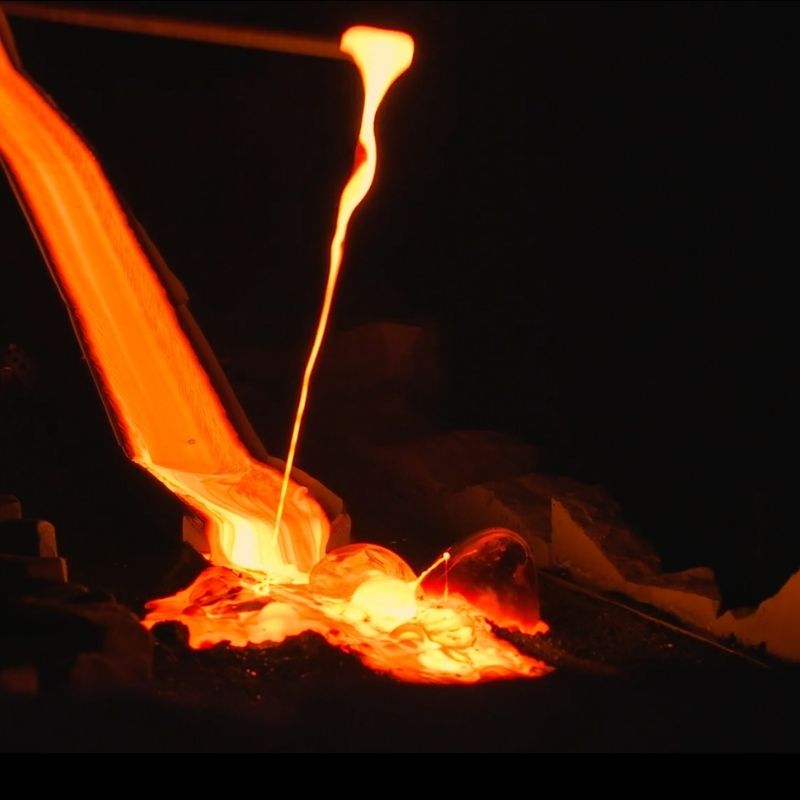
Real molten lava flows across the demonstration platform during a live Lava Show performance, giving visitors an unforgettable close-up view of one of nature’s most powerful forces.
Exploring Iceland’s Lava Caves and Tunnels
Some of Iceland’s most remarkable volcanic landscapes are hidden beneath the surface.
Lava tunnels form when the outer surface of a lava flow cools and solidifies while molten lava continues moving underneath. When the eruption ends and the remaining lava drains away, it can leave behind an underground passage shaped by the flow itself.
Exploring a lava cave does not mean seeing molten lava. Instead, it gives you the rare opportunity to step inside an ancient lava flow and examine the formations, colors and textures left behind.
The Lava Tunnel – Raufarhólshellir
Located approximately 30 minutes from Reykjavík, The Lava Tunnel at Raufarhólshellir is one of Iceland’s longest and best-known lava tunnels.
The tunnel was formed during an eruption around 5,200 years ago. On the guided Standard Tour, visitors follow the ancient path of the lava through a spectacular underground environment. Walkways and award-winning lighting reveal the tunnel’s vivid colors, enormous chambers and remarkable geological formations.
The tour takes approximately one hour and operates year-round. Helmets and lights are provided, while warm clothing and sturdy footwear are recommended.
The Standard Tour is accessible to most visitors, although it includes stairs and uneven surfaces and is not recommended for people with mobility difficulties or poor balance.
Combine Lava Show and The Lava Tunnel
For a more complete volcanic experience, the Lava Show & Lava Tunnel package brings two very different stages of lava’s journey together.
First, watch real molten lava flow at Lava Show in Reykjavík. Feel its heat, hear it sizzle and learn how lava behaves during an eruption. Afterwards, travel to Raufarhólshellir and walk through a tunnel created by a natural lava flow thousands of years ago.
Together, the experiences let you:
See real molten lava in motion.
Feel the extraordinary heat it produces.
Discover how flowing lava creates underground tunnels.
Walk through formations left behind by an ancient eruption.
Learn from expert guides at both attractions.
The package begins at Lava Show Reykjavík, followed by time to drive independently to The Lava Tunnel for the guided cave tour.
Experience Real Molten Lava at Lava Show
If you want to guarantee seeing real molten lava during your visit to Iceland, Lava Show offers a truly unique experience.
Located in Reykjavík and Vík, Lava Show is the world’s only live lava show, where genuine molten lava is superheated to approximately 1,100°C (2,000°F) before being poured into a specially designed showroom.
During the experience, you’ll:
Watch real molten lava flow just metres away.
Feel the intense radiant heat.
Hear the lava crackle as it cools.
Learn how Iceland’s volcanoes work from expert hosts.
Witness volcanic processes in complete safety.
Unlike volcanic eruptions, Lava Show operates every day, regardless of weather or volcanic activity, making it the only reliable way to experience flowing lava during your trip.
Experience | Real Lava | Year-round | Safe | Accessible |
|---|---|---|---|---|
Active volcanic eruption | Yes | No | Depends on conditions | Often difficult |
Lava fields | No (cooled lava) | Yes | Depends on conditions. New lava can be dangerous | Usually |
Lava Show | Yes | Yes | Yes | Yes |
Which Experience Is Best?
Each experience offers something different.
Active eruptions are extraordinary but unpredictable.
Lava fields reveal Iceland’s volcanic history.
Lava Show lets you safely witness the incredible power of molten lava whenever you visit Iceland.

A young guest eagerly asks a question during a live presentation at Lava Show, reflecting the interactive and educational experience enjoyed by visitors of all ages.
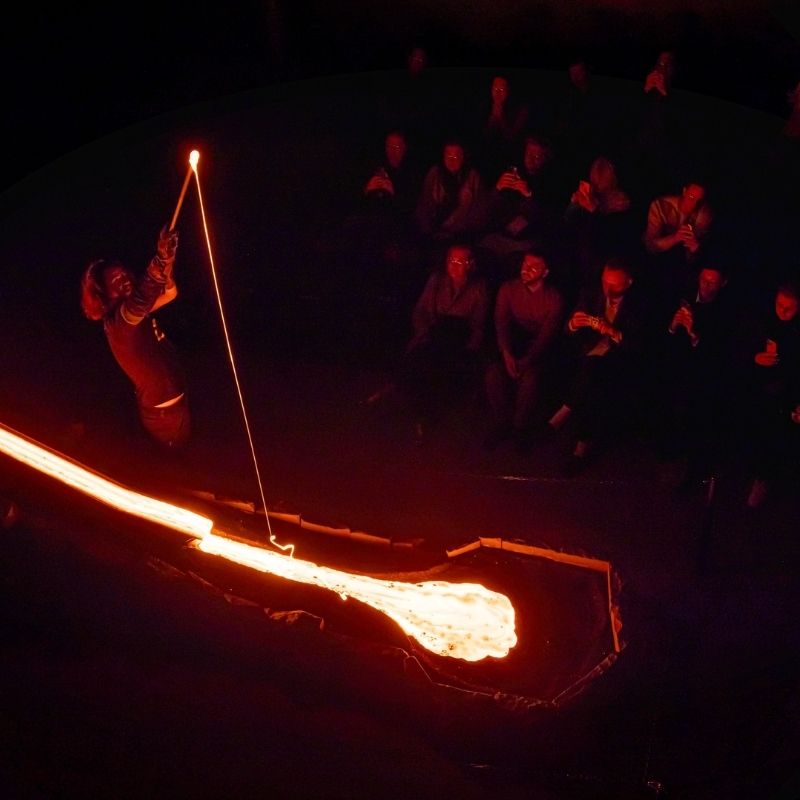
A Lava Master demonstrates the incredible power of real molten lava at Lava Show, giving guests a rare opportunity to experience flowing lava up close in a safe and controlled environment.
Experience Real Lava for Yourself
Whether you’re fortunate enough to witness an active eruption or you’re exploring Iceland long after the lava has cooled, volcanoes are an unforgettable part of any trip to the Land of Fire and Ice.
For visitors who want a guaranteed opportunity to see real molten lava, Lava Show offers an experience unlike any other. Watch lava flow, feel its incredible heat and discover why it has become one of Iceland’s highest-rated attractions.
Plan your visit:
Experience Lava Show Reykjavík – Watch real molten lava in Iceland’s capital.
Experience Lava Show Vík – Experience the world’s only live lava show on Iceland’s South Coast.