Volcanoes
The Laki Eruption: a Volcano that Shaped Nations and Culture Through the Power of Lava
The 1783 volcanic eruption called Laki was so enormous, it had far-reaching effects across continents and time, and demonstrates the power lava has to shape lives.
Today is the 15th anniversary of the last eruption within the Grímsvötn volcanic system, Iceland’s most modernly active volcanic system. On May 21st, 2011, the system’s central volcano, nestled under Europe’s largest glacier, awoke to produce its largest eruption in over 100 years. A plume of ash and tephra shot kilometres into the atmosphere, darkened local skies, and wafted material over Europe for days.
But this eruption is nowhere near the biggest or scariest of Grímsvötn’s history. Some 40-50 kilometres away from this central volcano, in 1783, magma shot through the subsurface in long dikes and erupted in one of the longest fissures in Iceland’s modern past near the mountain Laki. What ensued was an eight month long fissure eruption, producing so much lava and associated poisonous gases that the course of human history was changed.
This was the Lakagígur, or Laki for short, eruption, and incredibly famous volcanic eruption in central Iceland, that connects science, history, culture, and legends in a way that still echoes today.
Quick Facts
Eruption Dates: June 8th, 1783 – February 7th, 1784
Location: south-central Iceland, between the glaciers Vatnajökull and Mýrdalsjökull
Volcanic System: Grímsvötn volcanic system
Eruption Type: basaltic fissure eruption, southwest of the main central volcano
Fissure Length: ± 27 kilometres (17 miles)
Lava Area: ± 600 square kilometres (230 square miles)
Longest Lava Flow: Around 130 km (80 miles) through the Skaftá river system
Lava Type: Tholeiitic basalt
Gas Emissions: Estimated 120 million tons of sulfur dioxide, alongside fluorine and other volcanic gases
Significance: One of the deadliest and most environmentally significant volcanic eruptions in recorded history, causing famine in Iceland and atmospheric impacts across Europe and beyond
The Geology of the Laki Eruption
Iceland sits directly atop the Mid-Atlantic Ridge, where the North American and Eurasian tectonic plates slowly pull apart. Beneath Iceland also lies a mantle plume, often called the Iceland hotspot, supplying extraordinary quantities of magma into the crust. Together, these forces create one of the most volcanically active places on Earth.
The Grímsvötn volcanic system is the most active volcanic system in Iceland in modern times, stretching beneath and beyond the ice cap Vatnajökull. While Grímsvötn itself is a central volcano hidden beneath ice, the system also contains long fissure swarms that extend tens of kilometres across the Icelandic Highlands, both radially northeast and southwest away from the main volcanic center. The Lakagígur eruption was one such fissure style eruption.
Unlike explosive eruptions, such as Mount St. Helens or Vesuvius eruptions, the Laki eruption was primarily basaltic and effusive, meaning lava poured from the ground in immense quantities. Lava fountains likely reached hundreds of metres into the air at times, feeding enormous rivers of molten rock that travelled across southern Iceland. Some lava flows followed river valleys for hundreds of kilometres, making them among the longest historic lava flows on Earth.
The eruption produced around 15 cubic kilometres of lava, enough to bury entire cities beneath molten rock had the eruption occurred in a populated modern region. Yet lava itself was only part of the disaster.
The magma feeding Laki was exceptionally rich in dissolved volcanic gases that erupted with the lava. Sulfur dioxide created a thick volcanic haze across Iceland and Europe, while fluorine contaminated grazing land and poisoned livestock. The eruption ultimately released an estimated 120 million tons of sulfur dioxide, making it one of the largest volcanic gas release events in recorded human history.
One reason the eruption became so environmentally destructive was its duration. Rather than erupting violently for days, Laki continued for eight months. This prolonged release continuously pumped gases into the lower atmosphere, allowing toxic haze to spread across Europe and alter atmospheric conditions on a continental scale.
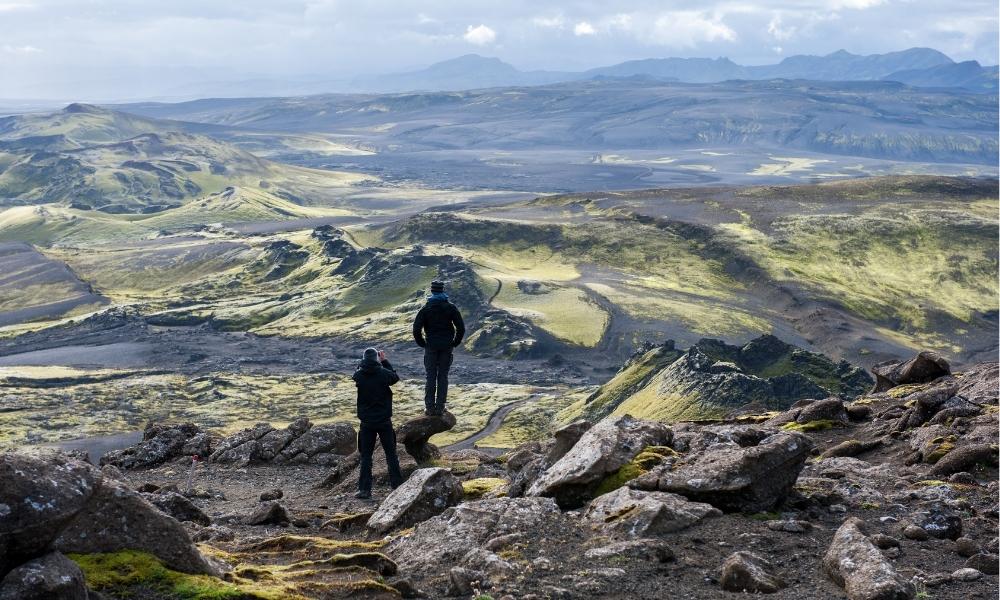
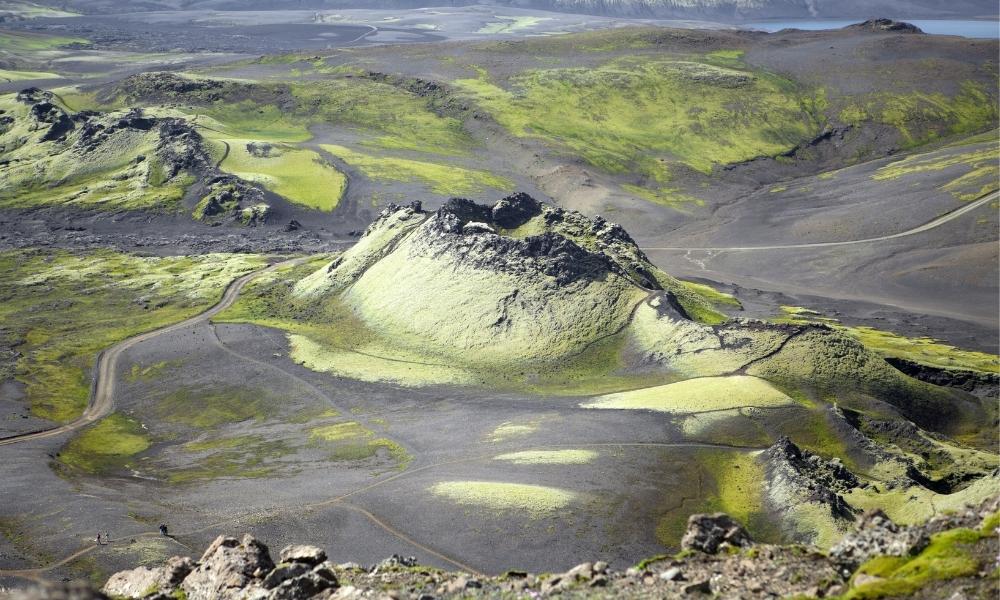
Two visitors overlook the vast Lakagígar crater row in Iceland’s Highlands, a volcanic landscape created during the catastrophic 1783–1784 Laki eruption.
Through Hardship and Myth: How Laki Affected Icelanders
For Icelanders living through the eruption, the disaster must have felt apocalyptic.
The eruption itself was terrifying enough. Lava fountains roared across the Highlands, earthquakes shook the land, and ash darkened the skies and drifted across farms. But the true horror came after the initial spectacle. A strange haze, known later as the “Mist Hardships” or Móðuharðindin, spread across the country. Grass withered. Livestock sickened and died. Rivers became contaminated, and famine followed. Over 50% of all animals perished within the year, and it is estimated that 20-25% of Iceland’s population died in the years following the eruption.
In a deeply religious eighteenth-century Iceland, many interpreted the eruption through a spiritual lens. Some believed it represented divine punishment, while others viewed it as a sign of the approaching end times. Sermons compared the eruption to biblical plagues and hellfire. The sky dimmed, poisonous fog spread across the land, and entire communities faced starvation. To many, it seemed as though the earth itself had turned against them.
No figure became more legendary from this period than Rev. Jón Steingrímsson, often remembered as “The Fire Priest.” According to Icelandic stories, as lava approached the settlement of Kirkjubæjarklaustur, Jón delivered what became known as the “Fire Sermon,” praying with his congregation while molten rock advanced nearby.
The lava ultimately stopped before further destroying the area.
Whether this happened through geography, geology, coincidence, or divine intervention depended on who was telling the story, but the event became one of the most famous myths in Icelandic volcanic history. Jón Steingrímsson transformed from a local priest into a symbol of resilience and protection against disaster.
Even the volcanic haze (called vog) itself became almost mythological in Icelandic memory. The “mist” was described less like weather and more like a living force creeping across the land, poisoning fields and suffocating communities. Without modern scientific understanding of volcanic gases, people interpreted the invisible danger through religion, folklore, and oral storytelling.
Today, the eruption remains deeply embedded within Icelandic cultural identity because it demonstrated both the terrifying power of Icelandic nature and the resilience of the people who survived it.
Volcanoes that Alter the Course of Human History
Although the eruption occurred in a remote part of Iceland, its effects spread astonishingly far.
The immense sulfur dioxide emissions from Laki entered the atmosphere and formed sulfate aerosols that drifted across Europe. Throughout the summer of 1783, observers across the continent reported a strange dry fog hanging in the air. The sun appeared red or dimmed, visibility worsened, and breathing difficulties became increasingly common. Upticks in average death rates were marked across central Europe.
In England, France, and elsewhere, contemporary writings describe oppressive heat, unusual atmospheric conditions and weather patterns, and widespread respiratory illness. Even Benjamin Franklin speculated that Icelandic volcanic activity might be connected to the unusual weather patterns affecting Europe.
The atmospheric effects did not stop with haze, humidity, and heat. The volcanic aerosols likely disrupted broader climate systems, contributing to colder winters and unstable weather in the years following the eruption. Crop failures increased in several regions, worsening food insecurity and economic hardship.
This is where geology begins intersecting directly with global history.
Historians and scientists have debated the extent to which the eruption contributed to social unrest in Europe, particularly in France. The French Revolution was caused by many complex political and economic factors, but food shortages and rising bread prices played major roles in destabilizing society. Some researchers argue that climatic disruptions linked to Laki may have intensified agricultural problems that contributed to public dissatisfaction in the years leading toward revolution.
Whether or not Laki can be called a direct cause of the French Revolution, the connection remains symbolically powerful: a fissure eruption in Iceland may have helped shape the political future of Europe.
The eruption also became one of the earliest volcanic events studied in a truly international context. Scientists later recognized that volcanic eruptions could influence global climate, atmospheric chemistry, agriculture, and public health far beyond the eruption site itself. In many ways, Laki helped lay foundations for modern understanding of volcanic hazards and climate interactions.
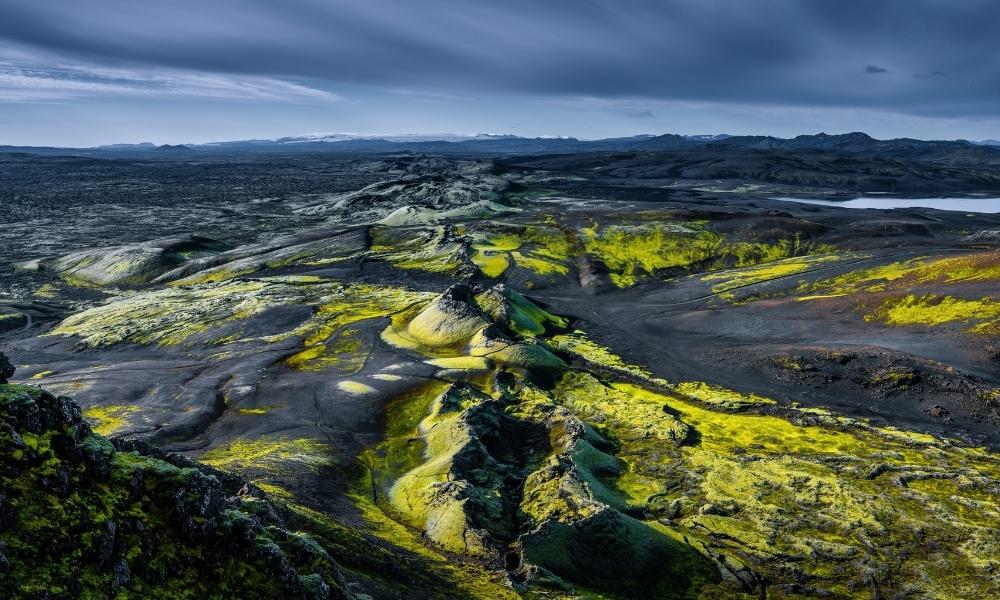
The dramatic Lakagígar crater row stretches across Iceland’s Highlands, where the immense 1783–1784 Laki fissure eruption released vast lava flows and volcanic gases that impacted much of Europe.
Final Thoughts about the Laki Eruption
The Laki eruption was far more than a geological event. It was a reminder that volcanoes possess the power to shape ecosystems, societies, economies, culture, religion, and even the course of history itself.
Through lava, gas, and ash, the eruption transformed Icelandic society, created legends that still survive today, altered atmospheric conditions across Europe, and may even have influenced political instability on the continent. Few eruptions demonstrate so clearly how interconnected Earth systems and human civilization truly are.
At Iceland’s Lava Show, these connections become tangible. Watching real molten lava flow only metres away offers a glimpse into the same forces that built Iceland, created volcanic landscapes like Lakagígar, and shaped human lives during eruptions such as Laki. While modern science now helps us understand these processes far bet
Frequently Asked Questions about Laki
ter than people could in 1783, the awe inspired by volcanic power remains exactly the same.
Experience Real Molten Lava
The Laki eruption reshaped Iceland and influenced lives far beyond its shores, demonstrating the immense power of flowing lava on a scale rarely seen in recorded history. While eruptions like Laki belong to history, Lava Show gives you the opportunity to safely witness real molten lava flowing just metres away. Feel its intense heat, hear it crackle as it cools and experience the remarkable natural force that continues to shape Iceland today.
Plan your visit:
Experience Lava Show Reykjavík – Watch real molten lava flow in Iceland’s capital.
Experience Lava Show Vík – Experience the world’s only live lava show on Iceland’s South Coast.
Read more!
Listen to the Lava Academy Podcast
Discover the Lava Academy Podcast where you get in-depth conversation focusing on the wonderful world of geology, volcanos and of course lava!
This article is written by geologist Jessica Poteet. Listen to the interview with her on the Lava Academy Podcast.