Volcanoes
Lava Types Explained: Your Guide to Exploring Lava in Iceland
Discover the main lava types in Iceland, from fast-flowing basalt to explosive rhyolite and all the lavas in between from the volcanoes you see as you travel the island.
At the Lava Show, you can experience real, molten lava as it would be directly coming out of the earth. You can feel the lava’s heat, here it break and shatter, and see the differences in appearance as it cools. It is a unique experience to see lava up-close, in a controlled environment, with a specialist to answer your questions. This unique experience is avaialble in our locations in Reykjavik or Vík.
But what about lava out in the wild: what is it made of, what geologic properties control its formation, and what does it look like along the road and at the main sites you visit in Iceland?
Lava can be complicated. There are so many different properties that control the appearance and composition of lava. But, we promise, it can be simplified! Here in this article, we will talk about the basic science of lava and how you can become a lava expert and wow all your family and friends as you travel through Iceland.
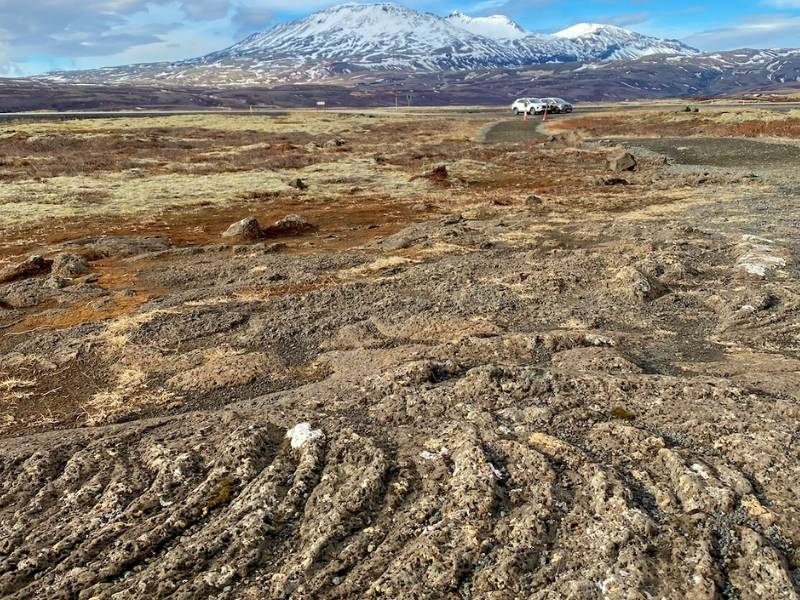
Ropy pāhoehoe lava at Þingvellir, formed by smooth, flowing basalt during gentle volcanic eruptions. Photo by Jessica Poteet.
Lava Basics: what controls the nature of lava
If you remember from previous Lava Academy articles, lava is magma that has erupted from the ground. The composition and conditions magma undergoes is what controls lava. And one of those main properties is rheology (a fluid’s ability to flow or not flow, i.e. viscosity). So what are the main rheological properties that make different magmas, and thus make different lavas:
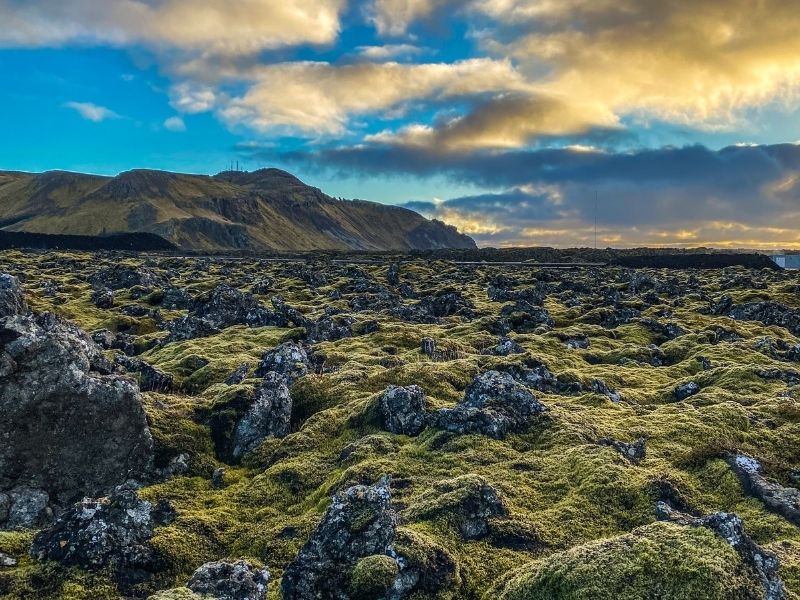
Jagged ʻaʻā lava field on the Reykjanes Peninsula, where rough, broken basalt creates a rugged and uneven landscape. Photo by Jessica Poteet.
Silica content
The more silica in the lava, the more its chemical elements are stuck together and tangled, which makes the lava thicker and harder to flow (more viscous). The more viscous a lava, the more it is prone to explosive eruptions.
Temperature
The hotter the lava, the more runny (less viscous) it is. Temperature is controlled by tectonic setting (i.e. are the tectonic plates spreading apart or colliding) of the erupting volcano and depth of magma storage chambers.
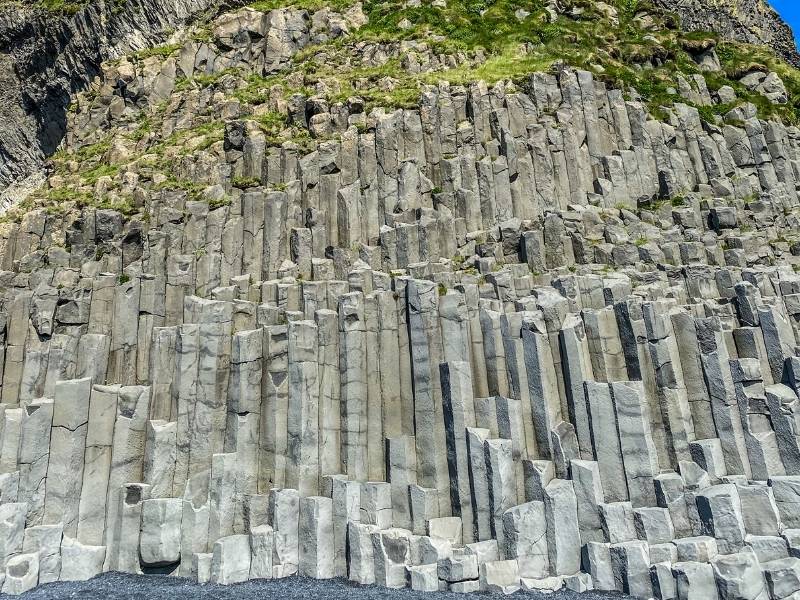
Columnar basalt formations at Reynisfjara, where cooling lava has fractured into striking hexagonal pillars. Photo by Jessica Poteet.
Silica content
Crystal content (or age of system)
The more solid crystal material in the lava, the more viscous a lava will be. Magma is usually made up of some percentage of fully melted material (melt), solidified material (mineral crystals), and gas (bubbles). And what causes a magma to solidify, thus making a more viscous lava? Time sitting underground (age), and cooling of the magma system.
Gas content (or pressure of system)
If trapped gas bubbles can escape from magma as it rises to the surface to erupt as lava, this also lowers the viscosity (runniness) of the lava. The more pressure in a volcanic system as the magma rises, the more gas tends to stay in the magma, causing it to explode and create thicker lava deposits.
As you can see, there are lots of physical properties that cause lava to form and behave differently. But this is just one way geologists and volcanologists classify lava. Above we talk about the silica content, and this is the key characteristic that scientists use when classifying and naming lavas.
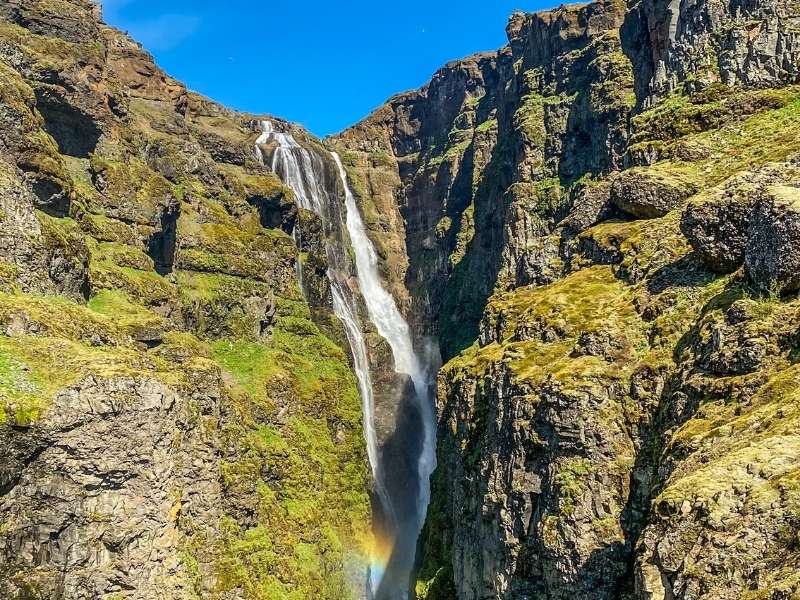
Glymur waterfall cascading through layered basalt cliffs, revealing dark, thin lava flows built up over time. Photo by Jessica Poteet.
Silica content
Silicate minerals: the backbone of the earth’s crust and its lavas
If you look at the chemical composition of the earth’s crust, it is predominately made up of silica-rich minerals (SiO2). There will be no chemistry tests in this article, but simply know that the percentage of these silicate minerals is how scientists classify lava, and usually that percentage is controlled by the type of rock being melted initially to form magma which in turn forms the lava we see on earth. Here is an easy, generalized breakdown of different lavas:
Mafic Lavas
Low silica (~45–52%)
Rich in iron and magnesium
High temperature (~1100–1200°C)
Low viscosity
Typical rock: basalt
Tectonic settings: mid-ocean ridges, hotspots (e.g., Iceland, Hawaii)
Flow type: mafic lavas are fluid and capable of traveling long distances.
Intermediate Lavas’
Moderate silica (~52–63%)
Intermediate viscosity and temperature (~900–1100°C)
Typical rock: andesite
Tectonic settings: subduction zones (e.g. Pacific Northwest, Japan, Indonesia)
Flow Type: mixed behavior, both effusive and explosive depending on gas content.
Felsic Lavas
High silica (>63%)
Rich in silica, sodium, and potassium
Lower temperatures (~650–900°C)
Very high viscosity
Typical rock: dacite, rhyolite
Tectonic settings
Continental arcs, evolved volcanic systems (Philippines, Indonesia, New Zealand, continental USA)
Flow Type
Sluggish, gloopy, and tend to form domes or thick, short flows.
Most of the lava you will see in Iceland will be basalt: large fields of hardened lava that formed hot, runny molten lava that came out of a fissure eruption or shield volcano. That said, there are areas of rhyolitic lava, formed from magma chambers that sat in the earth a long time and partially solidified or interacted with cooling waters from glaciers before erupting.
But as you are driving or hiking around Iceland, how will you know the difference? Let’s look at the different morphologies (rock shape, appearance) of lava that you can see here on the island, and teach you how to identify different lavas.
Easy-to-use Iceland Lava Field Guide
Here are the different lava types that you will see in Iceland, and here is how to differentiate between them as you encounter lava rocks in the wild.
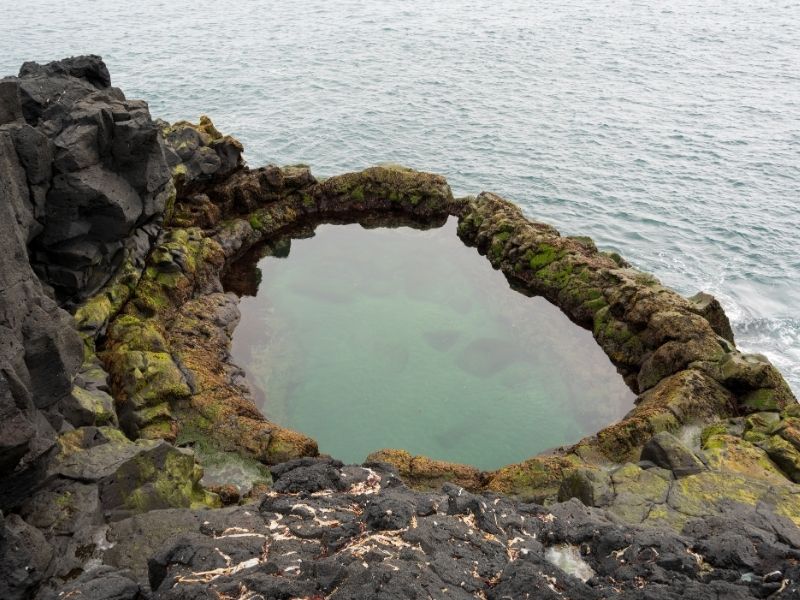
Brimketill lava pool on Iceland’s Reykjanes Peninsula, where waves have carved a natural basin into rugged basalt rock.
Basalt (the default rock in Iceland)
First impression: dark, dense, and widespread.
What Basalt lava looks like?
Color: black to dark gray (fresh), weathers to brown
Texture: very fine-grained, often with gas bubble holes (vesicles)
Field clues: widely expansive, dark, looks like elves could live there
Special surface types:
Smooth, ropy, called pāhoehoe
Rough, jagged, called ‘a‘ā
Vertical, smooth columns, called stuðlaberg in Iceland
Where to find Basalt lava
the lava fields at Fagradalsfjall and Sundhnúkur, the lava fields between Vík and Kirkjabæjarklaustur, columnar basalt at Reynisfjara and Svartifoss.
Rhyolite (the obvious contrast rock)
First impression: light-colored and visually striking.
What it looks like?
Color: light gray, pink, beige, sometimes yellow, can alter to green
Texture: very fine-grained, may contain visible crystals, can also be glassy
Field clues: thick masses, layered or flow bands, colorful
Special surface types:
Smooth, black glass, called obsidian
Very light, almost frothy texture, called pumice
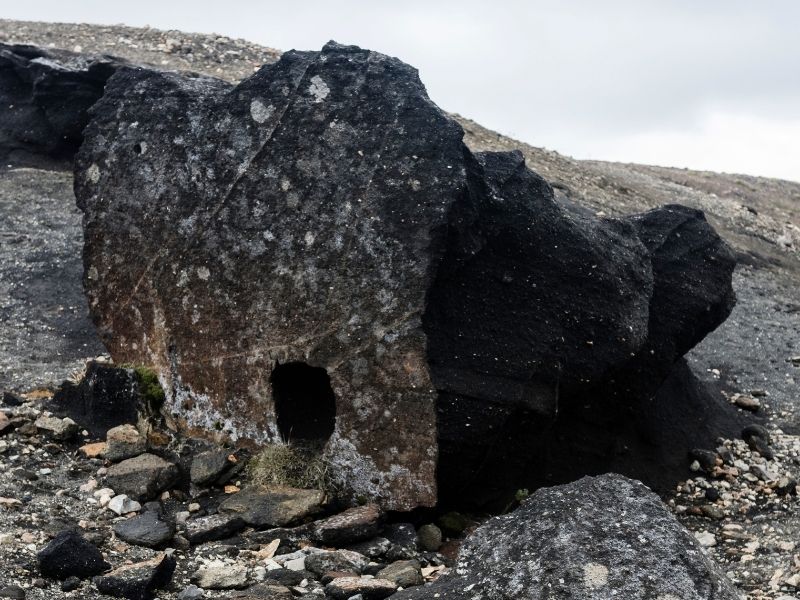
Obsidian rock in Hrafntinnusker, where rapidly cooled rhyolite lava forms Iceland’s striking black volcanic glass.
Where to find:?
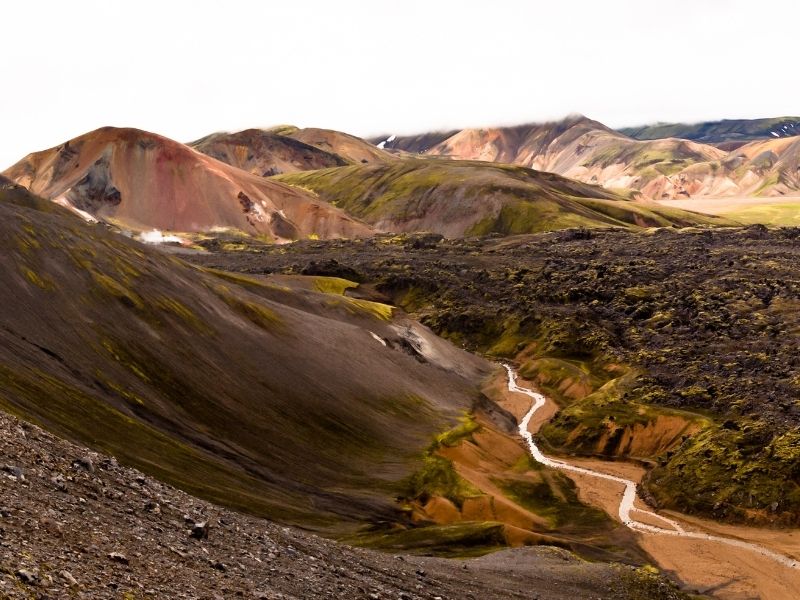
The colorful Highland mountains in Landmannalaugar and Kerlingarfjöll, many mountains in east Iceland, that one reddish mountain just east of Esjan in the Reykjavik area, called Mosfellshnjúkar.
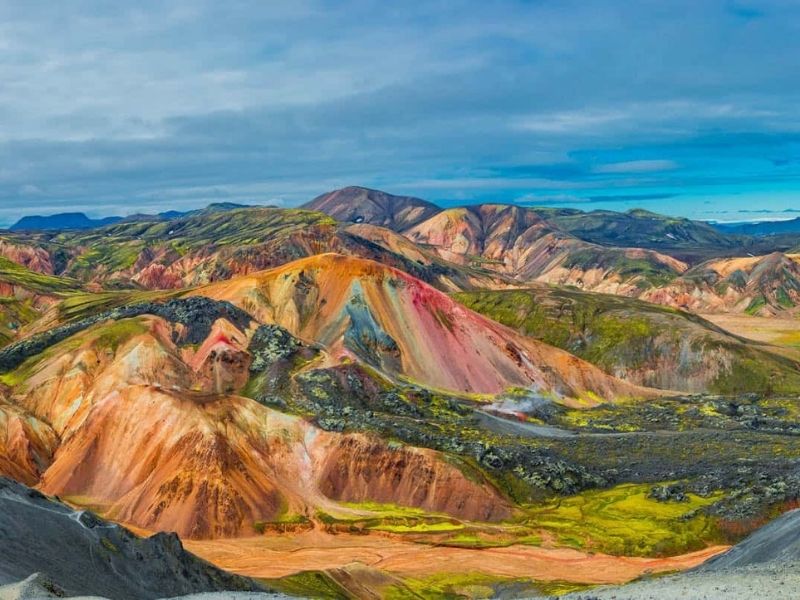
Vibrant rhyolite mountains in Landmannalaugar, shaped by evolved lava flows and rich mineral composition. Photo by Jessica Poteet.
Silica content
And here is a quick list for easy identification of the different lava types seen here in Iceland.
Dark, smooth or jagged, also columnar, and widespread? → Basalt
Flat, smooth, ropey texture and dark? → Pāhoehoe
Pointy, jagged, looks like an elf church, dark? → ‘A‘ā
Smooth, vertical columns, hexagonal shape → Columnar basalt, stuðlaberg
Light- or multi-colored, thick, banded? → Rhyolite
Glassy, smooth, black? → Obsidian
Light and frothy, with holes? → Pumice
Dark, rounded blobs, appearance like a pile of boulders? → Pillow lava
Brown, fragmented ridges, sometimes with sandy layers? → Hyaloclastite
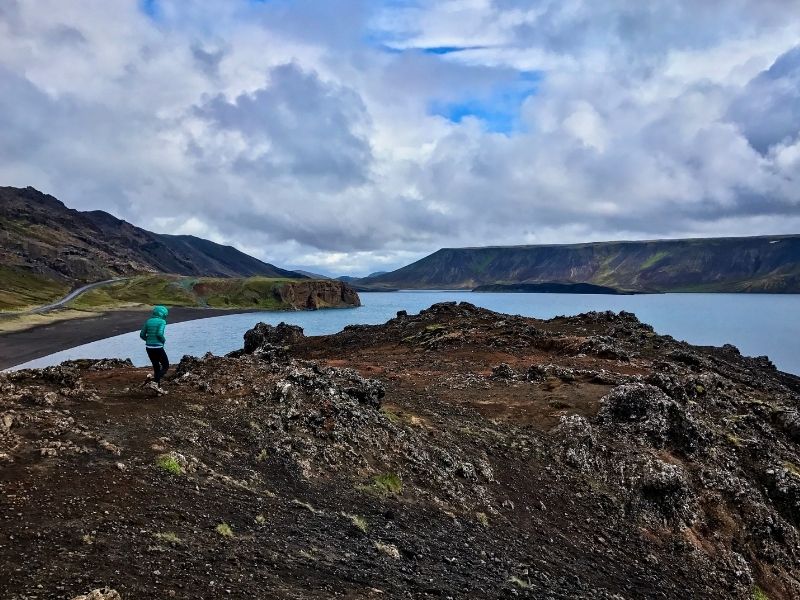
Kleifarvatn lake on the Reykjanes Peninsula, where subglacial eruptions have formed glassy, fragmented hyaloclastite landscapes along the shoreline. Photo by Jessica Poteet.
Silica content
Once you know what to look for, lava fields start to feel like a geological scavenger hunt. A footpath carved into ropy pāhoehoe, a mossy field of ʻaʻā, a piece of glassy obsidian on a hiking trail, a cliff face of columnar basalt: it is all out there waiting to be spotted. You might even find yourself thinking, “gotta catch ’em all,” like the Pokemon game, as you move across the landscape, ticking off each texture and form as another clue to how an ancient eruption unfolded.
The final thoughts on lava types
Lava is never just lava.
As you now know, it is the final expression of a journey that begins deep underground. A story that began when chemistry, temperature, pressure, gas, and tectonic setting all worked to shape how molten rock behaved once it reached the surface.
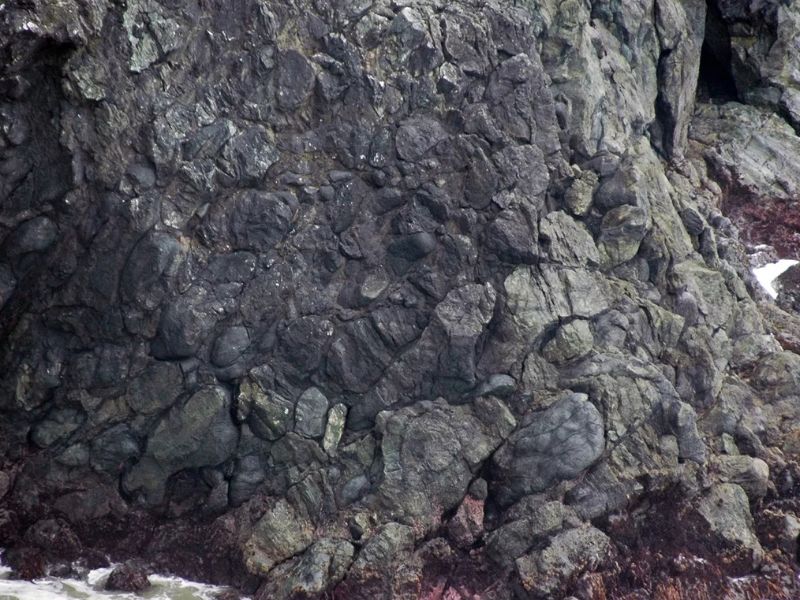
Pillow lava formations at Nesjavellir, created when molten lava erupted underwater and rapidly cooled into rounded, bulbous shapes.
Learning to recognize lava types is like learning a new language – one that lets you read the history of an eruption written across the landscape. At the Lava Show, that language comes alive. You don’t just hear about flow behavior, you see it happen in real time. And in that moment, the science of lava becomes something more: a direct connection to the dynamic forces still shaping our planet today.
Experience Real Molten Lava
Reading about Iceland’s different lava types is fascinating, but seeing real molten lava in motion is an experience you’ll never forget. At Lava Show, the world’s only live lava show, you’ll watch glowing lava flow just metres away, feel its intense heat and hear it crackle as it cools. It’s a unique opportunity to see firsthand how molten rock behaves before it solidifies into the lava formations found across Iceland.
Plan your visit:
Experience Lava Show Reykjavík – Watch real molten lava flow in Iceland’s capital.
Experience Lava Show Vík – Experience the world’s only live lava show on Iceland’s South Coast.
Frequently Asked Questions About Lava Types in Iceland
What is lava?
Lava is magma that has erupted onto Earth’s surface. Its appearance and behavior depend on factors such as chemical composition, temperature, crystal content, gas and pressure.
What determines whether lava is runny or thick?
A lava’s ability to flow is called viscosity. Hot lava with less silica is generally more fluid, while cooler, silica-rich lava containing more crystals tends to be thicker and slower-moving.
What are the three main types of lava by composition?
Scientists broadly classify lava as mafic, intermediate or felsic according to its silica content. Mafic lava is hot and fluid, intermediate lava has moderate viscosity, and felsic lava is cooler, thicker and more likely to produce explosive eruptions.
What is the most common type of lava in Iceland?
Basalt is by far the most common volcanic rock in Iceland. It forms from hot, fluid, low-silica lava and can create enormous lava fields during fissure eruptions and eruptions from shield volcanoes.
How can I recognize basalt in Iceland?
Fresh basalt is usually black or dark grey, although it can weather to brown. It is fine-grained and may contain holes left by gas bubbles. Basalt can appear as smooth pāhoehoe, jagged ʻaʻā or striking columns known as stuðlaberg in Icelandic.
What is the difference between pāhoehoe and ʻaʻā lava?
Pāhoehoe has a smooth, folded or rope-like surface created by fluid lava. ʻAʻā is rough, sharp and fragmented. Both are surface forms commonly produced by basaltic lava.
How are basalt columns formed?
Basalt columns form when a thick body of lava cools, contracts and fractures. This process often creates geometric pillars, many of which have five or six sides. Famous examples can be seen at Reynisfjara and Svartifoss.
Where can I see basalt lava in Iceland?
Basalt can be found across the country. Notable examples include the lava fields around Fagradalsfjall and Sundhnúkur, the extensive fields between Vík and Kirkjubæjarklaustur, Reynisfjara’s basalt columns and the formations surrounding Svartifoss.
What is rhyolite?
Rhyolite is a silica-rich volcanic rock formed from thick, highly viscous lava. It can be light grey, pink, beige, yellow or green and may display crystals, glassy surfaces, layers or distinctive flow bands.
Where can I see rhyolite in Iceland?
Some of Iceland’s most striking rhyolite landscapes are found in Landmannalaugar and Kerlingarfjöll. Rhyolite also occurs in East Iceland and at Mosfellshnjúkar, east of Mount Esja near Reykjavík.
What is obsidian?
Obsidian is volcanic glass produced when silica-rich lava cools so rapidly that crystals do not have time to form. It is usually black, smooth and glassy. Obsidian can be seen around Hrafntinnusker in Iceland’s Highlands.
What is pumice?
Pumice is a very light, porous volcanic rock filled with holes created by gas bubbles. It forms during gas-rich eruptions and can have an almost frothy appearance.
What is pillow lava?
Pillow lava consists of rounded, overlapping masses that resemble cushions or piles of boulders. It forms when lava erupts underwater and cools rapidly. Examples can be found around Nesjavellir.
What is hyaloclastite?
Hyaloclastite is a fragmented volcanic rock created when lava erupts beneath water or ice and cools extremely quickly. In Iceland, it often forms brown, glassy ridges with sandy layers, particularly in landscapes shaped by subglacial eruptions.
Why does silica make lava more explosive?
A high concentration of silica makes lava thicker and less able to flow. This can prevent volcanic gases from escaping easily, allowing pressure to build and increasing the likelihood of an explosive eruption.
Can I see real molten lava in Iceland?
Yes. At Lava Show in Reykjavík and Vík, you can see real molten lava flow just metres away, feel its intense heat and hear it crackle as it cools—all within a safe, controlled environment. It is the only live lava show of its kind in the world.
The Lava Academy Podcast
Discover the Lava Academy Podcast and listen to in-depth conversations foscusing on the wonderful world of geology, volcanos and of course lava!
This article is written by geologist Jessica Poteet. Listen to the interview with her on the Lava Academy Podcast.