Vulcani
Lava Academy Podcast: When Iceland’s Volcanoes Break the Rules with Páll Einarsson
Páll Einarsson was two days old when Hekla erupted in March 1947. His father, an engineer with a love of geology, went to see the eruption. Years later, Páll would explore the Reykjanes Peninsula with his father and siblings. And when he grew up, he became the geophysicist that Icelanders like Ragnhildur Ágústsdóttir remember seeing on television whenever the ground began to shake.
In this episode of the Lava Academy Podcast, Ragnhildur, founder of Lava Show, and Lava Master Iain MacKinnon sit down with Páll Einarsson, professor emeritus of geophysics at the University of Iceland. They talk about the eruption that upended what Icelanders thought they knew about Hekla, a missing piece of mountain on the flank of Katla, and a question Iain often hears from visitors at Lava Show. What is it like to live here when the ground can open up beneath your feet?

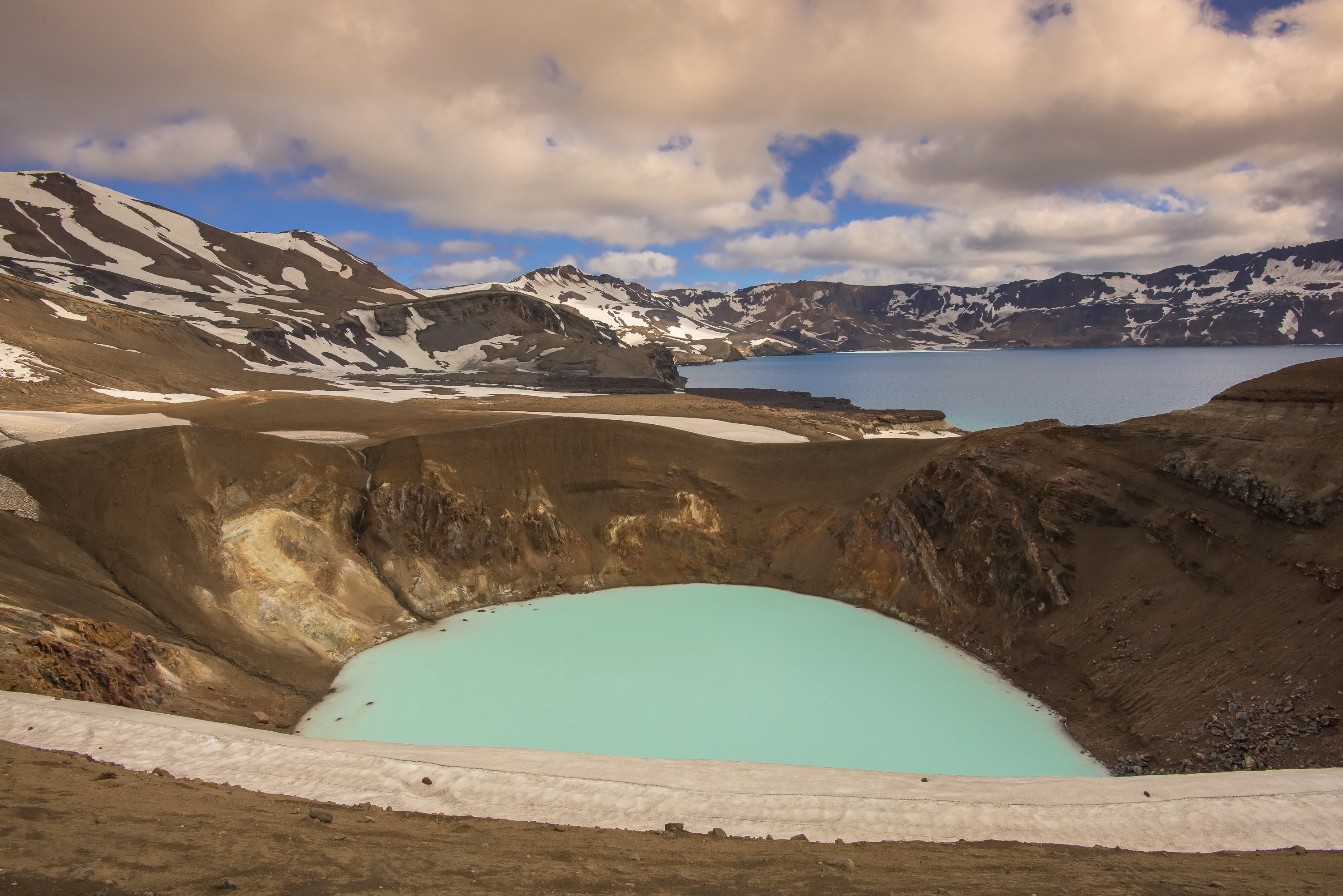
Clouds drift across Katla. On the Lava Academy Podcast, Páll Einarsson recalls how a student studying aerial photographs spotted a huge landslide on the volcano’s western flank.
Watch this episode of the Lava Academy Podcast on YouTube
How often does Hekla erupt? It depends on when you went to school
Páll remembers when Icelanders could confidently tell you that Hekla erupted once a century. Then, in 1970, just 23 years after the great eruption of 1947, it erupted again.
Ragnhildur remembers learning a different rule altogether. By the time she was growing up, Hekla was said to erupt every ten years. For a while, a string of eruptions roughly a decade apart made that a convincing answer. In 2010, people were watching Hekla. Eyjafjallajökull erupted instead.
Put those two childhood memories side by side and you get a sense of what keeps Páll interested after a lifetime in geophysics. An eruption can change the volcano itself. Even with a good record of what happened last time, there is always something new to figure out.

Katla during its 1918 eruption. On the Lava Academy Podcast, Páll Einarsson explains why this famous eruption tells only part of the volcano’s story.
The student who noticed a mountain was missing nearly 200 metres
One of the episode’s best stories begins with a PhD student from Spain comparing aerial photographs of Iceland’s glaciers. On the western flank of Katla, he spotted something he hadn’t been looking for. A mountain was nearly 200 metres lower than it had been in earlier images. A huge landslide had gone largely unnoticed.
For Páll and his colleagues, the location rang a bell. When they began mapping earthquakes at Katla in the 1970s, they found one cluster inside the volcano’s caldera and another on its western flank. For years, the western cluster was about as active as the main one. Then it fell quiet.
The photographs gave the researchers a fresh way to look at those old earthquake records. Could a cryptodome, a mass of thick magma pushing up beneath the surface, help explain what happened there? Páll takes Iain and Ragnhildur through the clues and the questions his team was still working on when they recorded the episode.

Lava fountains at Fagradalsfjall on Iceland’s Reykjanes Peninsula in April 2021. On the Lava Academy Podcast, Páll Einarsson explains how the valley helped contain these flows and why later eruptions near Grindavík posed a greater threat to the town.
What makes an eruption warning work?
At Lava Show, visitors sometimes ask Iain, “Aren’t you scared living here?” Páll’s answer to the wider question begins with the people who receive a warning. During the Eyjafjallajökull eruptions, residents were asked to leave their homes and gather for a meeting. They went. What struck Páll was how surprised some of his colleagues abroad were to hear that part of the story.
It brings the conversation back to Ragnhildur’s childhood memory of seeing Páll on television. Long before anyone in Iceland needs to act on a warning, they’ve had a chance to hear a scientist explain, in everyday language, what is happening underground. As Páll puts it, “Knowledge is power. And knowledge is also comfort.”
Listen to the full conversation to hear Páll explain what scientists can learn from the ground rising near Grindavík, what he means by a “stolen eruption,” and why, even in retirement, he keeps asking questions.