Vulkane
Krafla-Vulkan: Die (Lava-)Feuer von Krafla und Islands dynamischstes Vulkansystem
Erkunden Sie den Vulkan Krafla in Nordisland, der für die Lavaspalten der Krafla-Feuer, geothermische Aktivität und einige extrem heiße Bohrlöcher bekannt ist.
In Island wird das Wort eldar – zu Deutsch „Feuer“ – seit langem verwendet, um lang anhaltende vulkanische Episoden zu beschreiben, die mit wiederholten Spalteneruptionen, Erdbeben, Bodenverformungen und Magmabewegungen einhergehen. Statt einer einzelnen dramatischen Explosion ist ein „Feuer“ oft ein jahrelanges vulkanisches Ereignis, bei dem die Erde aufreißt und auseinanderbricht, begleitet von Bändern ausbrechender Lava. Berühmte Beispiele sind die verheerenden Laki-Feuer und die mittelalterlichen (sowie modernen) Reykjanes-Feuer.
Zu den wissenschaftlich bedeutendsten dieser Ereignisse gehören die Krafla-Feuer, eine dramatische neunjährige Abfolge von Dehnungsereignissen und Eruptionen im Nordosten Islands, die das Verständnis von Vulkanologen über das Auseinanderdriften von Platten und Magmabewegungen unter Island grundlegend verändert haben.
Heute betrachten viele Wissenschaftler die Krafla als eines der besten modernen Analoga für das, was sich derzeit bei Svartsengi auf der Halbinsel Reykjanes abspielt. Die wiederholten Magmaintrusionen, episodischen Spalteneruptionen, Hebungs- und Senkungszyklen sowie die Dehnung der Erdkruste, die derzeit nahe Grindavík auftreten, ähneln stark den Prozessen, die vor fast fünfzig Jahren an der Krafla beobachtet wurden.
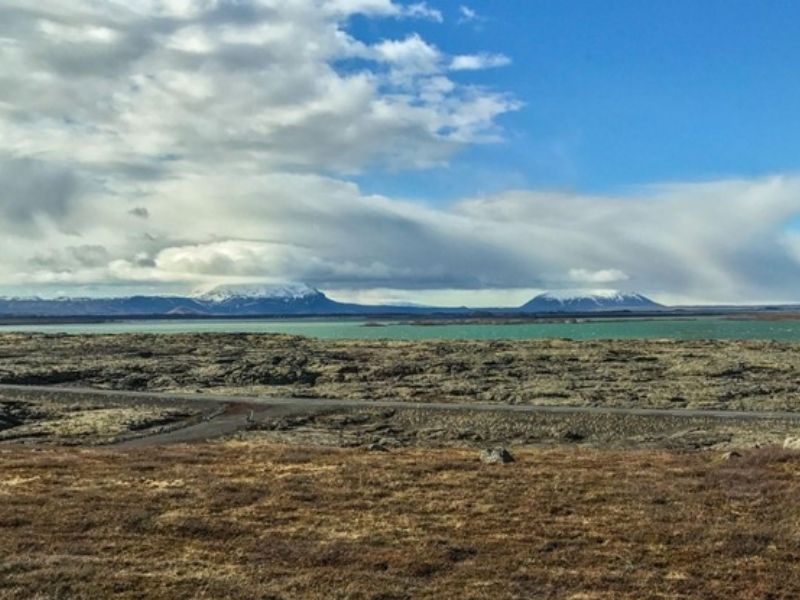
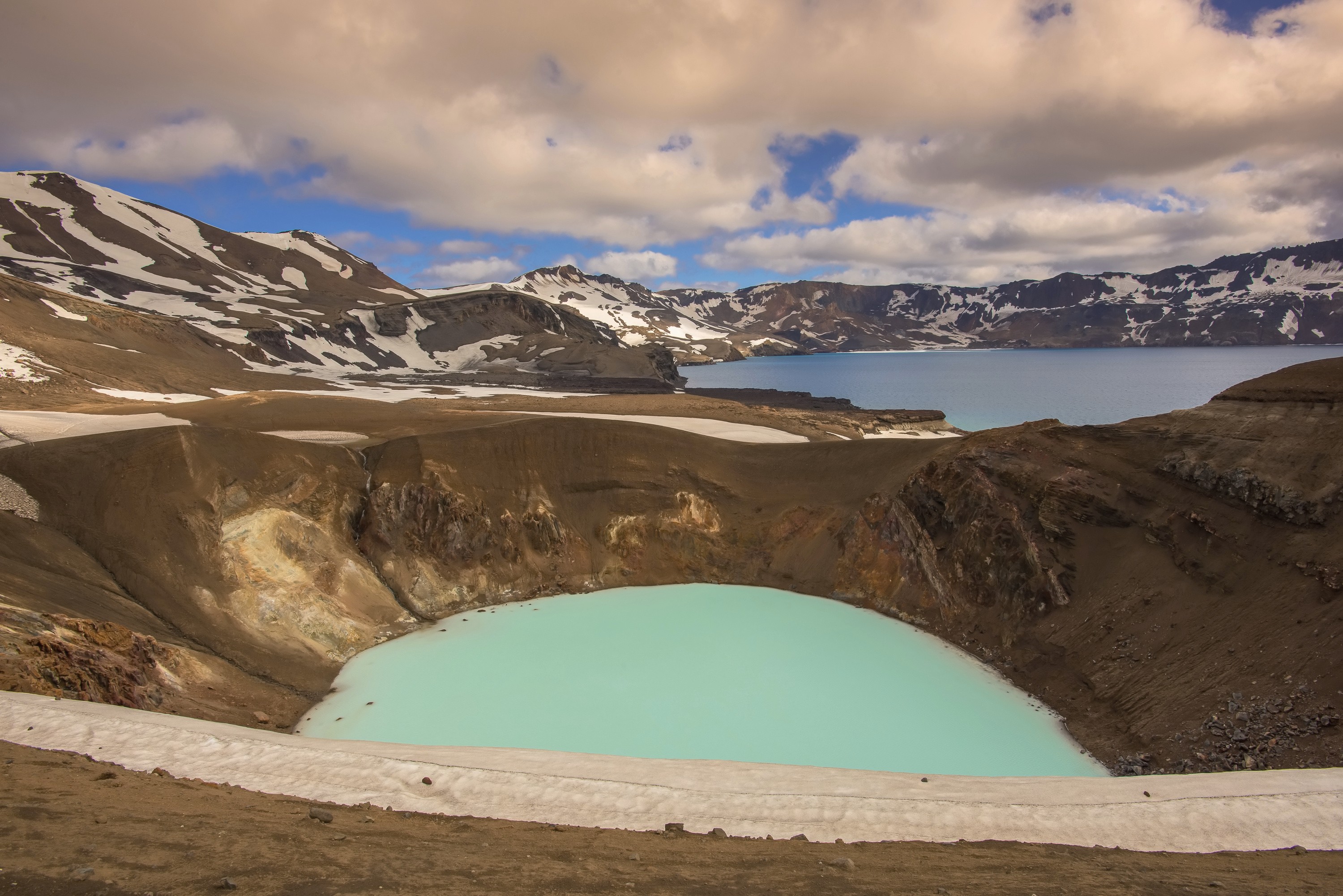
Große Krater in der Ferne an den Ufern des Mývatn-Sees. Es ist interessant zu wissen, dass die Caldera des Mývatn-Sees und diese nahe gelegenen Tafelberge (Tuyas) NICHT zum Krafla-Vulkansystem gehören, sondern Teil eines weniger aktiven, sich überschneidenden Systems sind. Bildnachweis: Jessica Poteet
Aber die Krafla ist mehr als nur eine Geschichte über Vulkanausbrüche. Sie ist auch eine der faszinierendsten Geothermalregionen der Welt, in der Menschen direkt in flüssiges Magma gebohrt haben. Bohrungen an der Krafla haben versehentlich geschmolzenes Gestein an die Oberfläche befördert und revolutionäre Ideen zur direkten Energiegewinnung aus dem Magma der Erde inspiriert. Kaum ein anderer Ort auf der Erde zeigt das Zusammenspiel von Vulkanismus, Tektonik und Geothermie so eindrucksvoll wie die Krafla.
Schnelle Fakten über Krafla
Letzte Eruptionsdaten: 1975–1984 (Krafla-Feuer); 1724–1729 (Mývatn-Feuer)
Lage: Nordostisland, nahe Mývatn
Vulkansystem: Krafla-Vulkansystem, in der Nordvulkanischen Zone (NVZ)
Eruptionstyp: Frühphase im Lebenszyklus: zentraler Schildvulkan; heute: Spalteneruptionen
Lavafläche: ±35 km² während der Krafla-Feuer
Geothermisches Systemareal: 40 km²
Gesamtfläche des Vulkansystems: 900–1100 km² (historische Spaltenzone ist 90 km lang)
Lavatyp: Hauptsächlich basaltische Lava, frühe Eruptionen des Zentralvulkans wiesen Rhyolith-Mischungen auf
Gasemissionen: Auffallend gering
Bedeutung: Ein weltweit berühmtes Beispiel für aktives kontinentales Rifting, Magmaintrusion, geothermische Erschließung und Magma-Bohrforschung
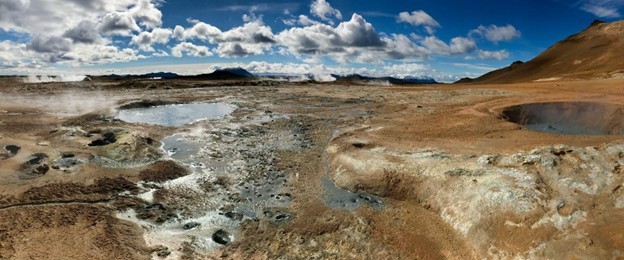
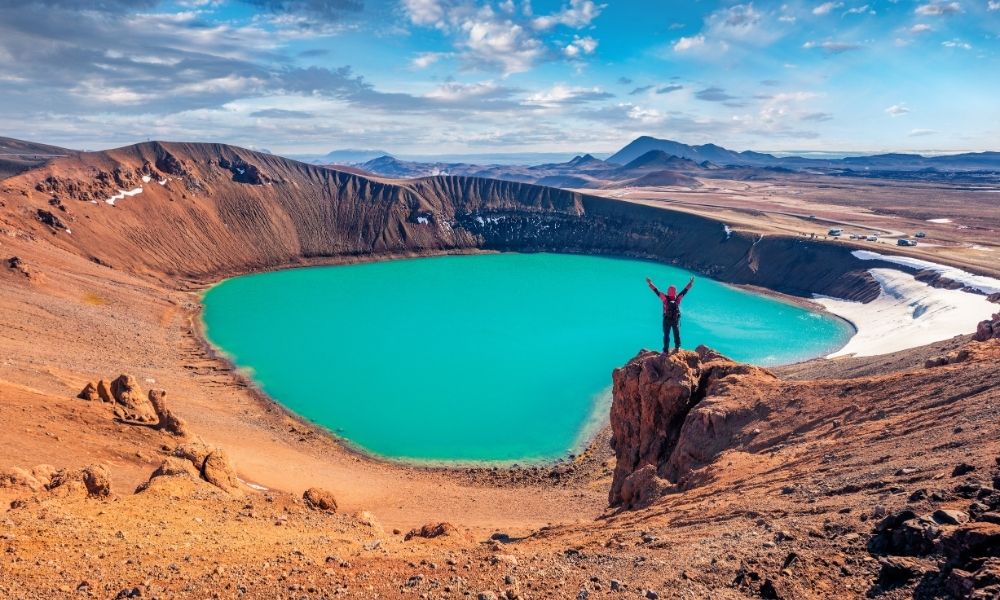
Das Geothermalgebiet Hverir ist ein aktives geologisches Gebiet, das an den Krafla-Zentralvulkan angrenzt und südlich der Krafla-Feuer-Lavafelder liegt. Dieses Gebiet ist ein wunderschönes Ausflugsziel mit Naturpfaden und Wanderwegen. Es ist meist nicht überlaufen und fasziniert mit Schlammtöpfen, kochenden Fumarolen und blubbernden hydrothermalen Quellen, mit Blick auf die nahe gelegenen Krater des Krafla-Vulkansystems. Bildnachweis: Jessica Poteet
Die Krafla-Feuer: Wenn Island in Echtzeit zerreißt
Das Krafla-Vulkansystem liegt direkt auf der Grenze zwischen der nordamerikanischen und der eurasischen tektonischen Platte, wo die Erdkruste durch den Mittelatlantischen Rücken langsam auseinandergezogen wird. Im Gegensatz zu vielen Vulkansystemen, die in isolierten, durch Jahrhunderte getrennten Ereignissen ausbrechen, verhält sich die Krafla episodisch. Lange Ruhephasen werden durch intensives Rifting unterbrochen, bei dem über Jahre oder Jahrzehnte hinweg wiederholt Magma in die Kruste eindringt.
Die Krafla-Feuer begannen dramatisch im Dezember 1975, als ein ungewöhnlicher Erdbebenschwarm die Region erschütterte. Wissenschaftler beobachteten eine rasche Verformung des Bodens, da sich Magma unter der Caldera ansammelte, bevor es plötzlich seitlich durch unterirdische Brüche – sogenannte Dikes (Gänge) – abfloss. Dieses Muster sollte sich in den folgenden neun Jahren immer wieder wiederholen.
Insgesamt gab es in diesem Zeitraum neun Eruptionen und insgesamt 20 verschiedene magmatische Hebungs- und Senkungsereignisse, die die Landschaft veränderten. Dieses Verhalten ist einer der anschaulichsten Beweise, die je dafür aufgezeichnet wurden, wie das Auseinanderdriften der Platten in Island (und vielleicht auch anderswo auf der Welt) tatsächlich abläuft. Anstatt sich allmählich und gleichmäßig auszudehnen, baut die tektonische Dehnung im Laufe der Zeit Spannungen auf, die sich dann in plötzlichen Schüben während der Rifting-Episoden entladen. Ein solches Rifting im Krafla-Stil sieht folgendermaßen aus:
Magma sammelt sich in der Region des Krafla-Zentralvulkans unter seiner Caldera an.
Anstatt nach oben auszubrechen, erreicht es einen bestimmten Druck und drückt sich plötzlich seitlich über Kilometer hinweg durch das bestehende Gestein, wobei sich Gänge (Dikes) bilden.
Das Gebiet der Caldera senkt sich messbar ab (ähnlich wie beim Kīlauea vor einem Ausbruch).
Der Boden direkt über den Gängen sinkt ab und bildet einen Graben.
Das an die Gänge angrenzende und parallel verlaufende Land hebt sich an und bildet einen Horst.
Die Gänge brechen in langgezogenen Spalten kilometerweit entfernt von dem ursprünglichen unterirdischen Magmasammelgebiet aus.
Im Laufe der Zeit, durch diese Phasen der Magmabewegung, Bodenverformung, Verwerfung und den anschließenden Ausbruch, dehnt sich die Erde aus und wird breiter.
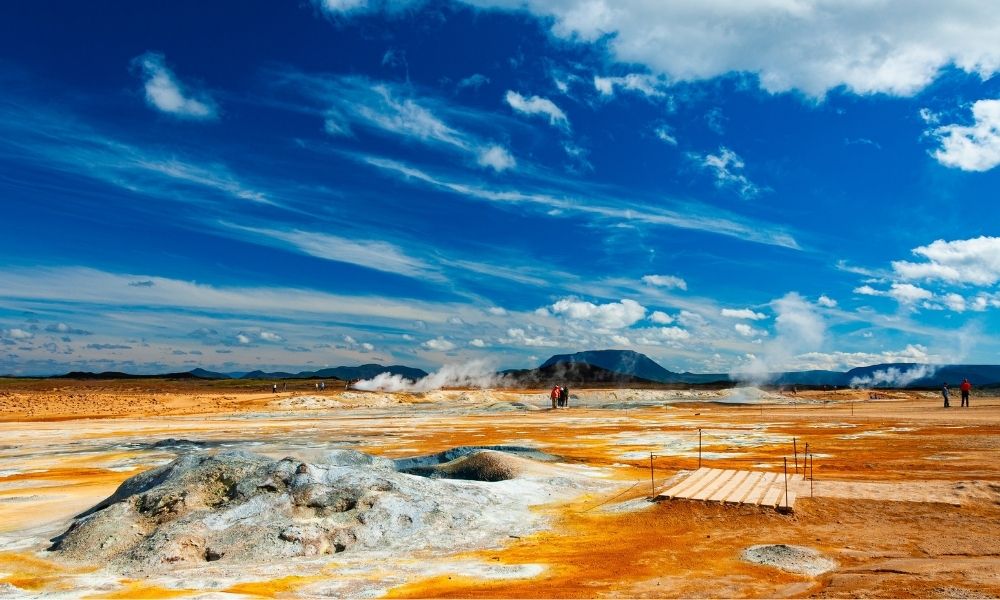
Die farbenprächtige Geothermallandschaft des Námaskarð-Passes nahe dem Mývatn-See in Nordisland, wo dampfende Fumarolen, brodelnde Schlammtöpfe und mineralreicher Boden die gewaltige geothermische Aktivität unter dem Krafla-Vulkansystem offenbaren.
Die Krafla-Feuer als Parallele zu den Reykjanes-Feuern
Die Parallelen zur heutigen Aktivität im Vulkansystem Svartsengi und den Eruptionen bei Sundhnúkur sind verblüffend. Auf der Halbinsel Reykjanes sammelt sich heute wiederholt Magma unter der Kruste an, bevor es sich seitlich in Gängen in Richtung der eruptiven Spalten ausbreitet. Hebungs- und Senkungszyklen, Erdbebenschwärme und episodische Eruptionen spiegeln alle die Muster wider, die während der Krafla-Feuer dokumentiert wurden. In beiden Systemen scheint sich das Magma eher in Schüben als in einem kontinuierlichen, gleichmäßigen Fluss zu bewegen. Sogar das mittlerweile längere Warten zwischen den Eruptionen in Svartsengi war an der Krafla zu beobachten; könnten wir am Sundhnúkur jahrelang auf das nächste vulkanische Ereignis warten?
Einer der faszinierendsten Aspekte der Krafla ist, wie episodisch ihre Eruptionsgeschichte zu sein scheint, mit Hunderten bis zu tausend Jahren zwischen den Spaltenschwärmen. Geologische Belege deuten darauf hin, dass das System lange Ruhephasen durchläuft, die von konzentrierten Phasen tektonischer und vulkanischer Unruhe unterbrochen werden. Dieses Verhalten ist charakteristisch für isländische Riftzonen und zeigt sich auch auf Reykjanes und seinen 5–6 Vulkansystemen. Anstatt kontinuierlich auszubrechen, speichern Vulkansysteme entlang von Spreizungszentren oft jahrzehntelang oder jahrhundertelang tektonische Spannungen und Magmadruck, bevor sie diese Energie in intensiven „Feuer“-Episoden freisetzen.
Ein wesentlicher Unterschied liegt jedoch in der Geografie. Die Krafla befindet sich in einer dünn besiedelten Region, während das Svartsengi-System die Infrastruktur und Gemeinden wie Grindavík und die berühmte Blaue Lagune bedroht. Dennoch bietet die Krafla aus wissenschaftlicher Sicht einen unschätzbaren Fahrplan, um zu verstehen, wie lang anhaltende Rifting-Episoden auf der Halbinsel Reykjanes über Jahre und sogar Jahrhunderte hinweg aussehen könnten. Welche Erkenntnisse werden wir in Svartsengi gewinnen, die uns helfen, die nächste Eruptionsserie an der Krafla in ein paar hundert Jahren vorherzusagen?
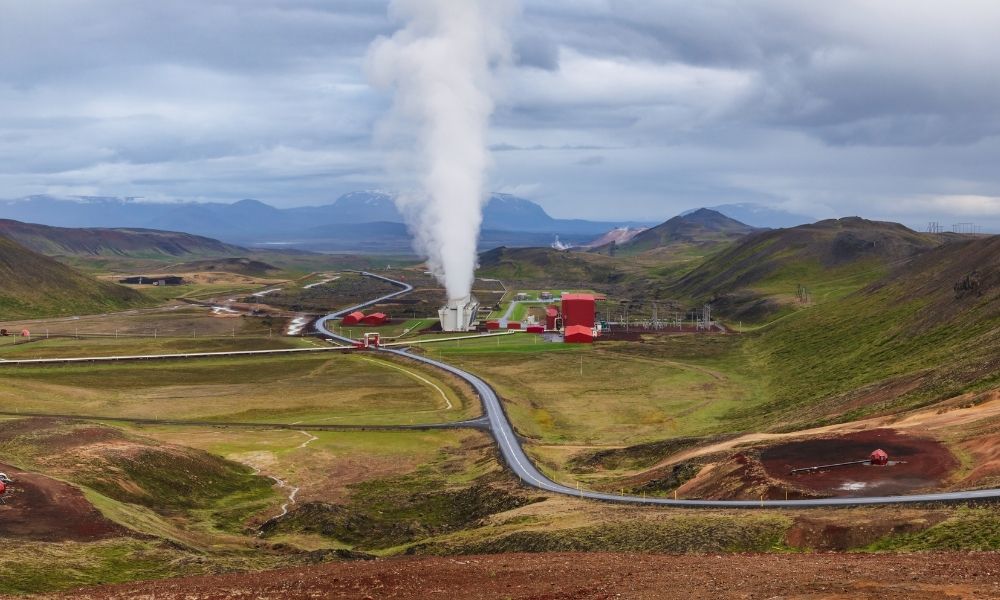
Das Krafla-Geothermiekraftwerk in Nordisland nutzt vulkanische Wärme aus dem aktiven Krafla-Vulkansystem, um inmitten einer dramatischen Vulkanlandschaft erneuerbare Energie zu erzeugen.
Magma berühren: Was passiert, wenn wir in flüssiges Gestein bohren?
Die Krafla ist nicht nur für ihre Ausbrüche berühmt. Sie ist auch eine der außergewöhnlichsten geothermischen Forschungsstätten der Welt. In der Region befindet sich das Krafla-Kraftwerk, in dem hochtemperierte geothermische Fluide zur Stromerzeugung genutzt werden. Doch das Bohren in einem so aktiven Vulkansystem birgt ungewöhnliche Risiken. An der Krafla sind Ingenieure wiederholt direkt unter dem Geothermalfeld auf Magma gestoßen.
Einer der bemerkenswertesten Vorfälle ereignete sich bei einer Bohrung im Jahr 1968, noch vor dem Beginn der Krafla-Feuer. Jahre später, 1977 – zwei Jahre nach dem Einsetzen neuer Magmabewegungen im Zusammenhang mit dieser vulkanischen Rifting-Episode – drang Magma in das Bohrloch ein (bewegte sich im Untergrund). Obwohl das Bohrloch selbst damals sehr weit südlich des aktiven Lavafeldes lag, befand es sich direkt auf dem Ausbreitungspfad des Ganges zwischen dem Zentralvulkan und dem aktiven Spaltengebiet. Berichten zufolge stieß das Bohrloch rund drei Tonnen geschmolzenes Material an die Oberfläche aus und wurde so praktisch zu einem winzigen, künstlichen Vulkanschlot, der durch die Bohrung entstanden war.
Noch bekannter war die versehentliche Begegnung mit Magma während des Iceland Deep Drilling Project (IDDP) im Jahr 2009. Ingenieure, die tief unter der Krafla bohrten, stießen unerwartet in etwa 2,1 Kilometern Tiefe auf rhyolithisches Magma. Anstatt das Projekt vollständig zu zerstören, überstand das Bohrloch die Bedingungen lange genug, sodass Forscher überhitzte Fluide mit Temperaturen von über 400 °C untersuchen konnten.
Diese Entdeckung war revolutionär. Wissenschaftler erkannten, dass geothermische Bohrungen in der Nähe von Magma potenziell enorme Energiemengen erzeugen könnten, die weit über konventionelle Geothermiesysteme hinausgehen. Die in der Nähe von Magmakörpern verfügbare Wärme ist immens, was die Möglichkeit von „superkritischen“ Geothermiekraftwerken eröffnet, die die Energieausbeute drastisch steigern könnten.
Gleichzeitig machten diese Ereignisse die Gefahren deutlich, die das Bohren in ein aktives Vulkansystem mit sich bringt. Bohrlöcher können katastrophal versagen, Magma kann unerwartet eindringen und vulkanische Gase können schwere Gefahren verursachen. Die Krafla befindet sich daher an der Grenze zwischen Energieinnovation und vulkanischem Risiko.
Erfahren Sie mehr darüber, wie Island geothermische Energie nutzt, in der Lava Academy Podcast-Folge: Geothermie 101, die ein Interview mit dem Geologen und Wissenschaftskommunikator Kári Valgeirsson enthält.
Häufig gestellte Fragen zu Krafla
Ist die Krafla von 1975 bis 1984 kontinuierlich ausgebrochen?
Nein. Die Krafla-Feuer bestanden aus vielen separaten Rifting- und Eruptionsereignissen, die sich über fast ein Jahrzehnt erstreckten. Einige Episoden verursachten lediglich Erdbeben und Bodenverformungen, während andere Lavaeruptionen hervorbrachten. Das ist dem, was wir auf Reykjanes sehen, sehr ähnlich.
Ist „Krafla“ nach einem nordischen Gott benannt?
Wahrscheinlich nicht. Der Name leitet sich vermutlich von einem alten isländischen Wort ab, das mit Reißen oder Spalten zu tun hat – eine treffende Beschreibung für ein Vulkansystem, in dem der Boden immer wieder aufreißt. Es ist jedoch wichtig zu erwähnen, dass andere „Feuer“-Ereignisse innerhalb des Krafla-Vulkansystems andere Namen haben, die sich auf nahe gelegene, moderne Orte beziehen.
Ist die Krafla heute gefährlich?
Ja und nein. Sie wird streng überwacht und liegt direkt neben einer wichtigen geothermischen Infrastruktur. Dennoch gilt: Obwohl das Vulkansystem aktiv bleibt, werden zukünftige Eruptionen oder Rifting-Episoden frühestens in einigen hundert Jahren erwartet und würden in einer recht dünn besiedelten Gegend stattfinden.
Könnte Island wirklich Magma zur Energiegewinnung nutzen?
Potenziell ja. Das IDDP-Projekt hat gezeigt, dass Bohrungen in der Nähe von Magma den Zugang zu extrem heißen geothermischen Fluiden ermöglichen können, die weitaus mehr Energie erzeugen können als herkömmliche geothermische Bohrungen. Um mehr zu erfahren, lesen Sie mehr über das Projekt Krafla Magma Testbed.
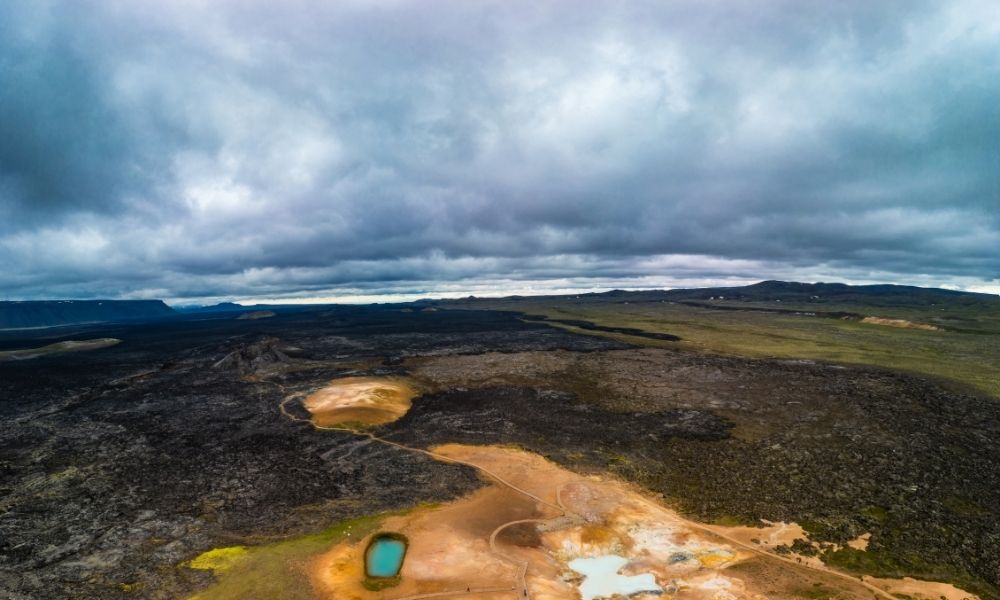
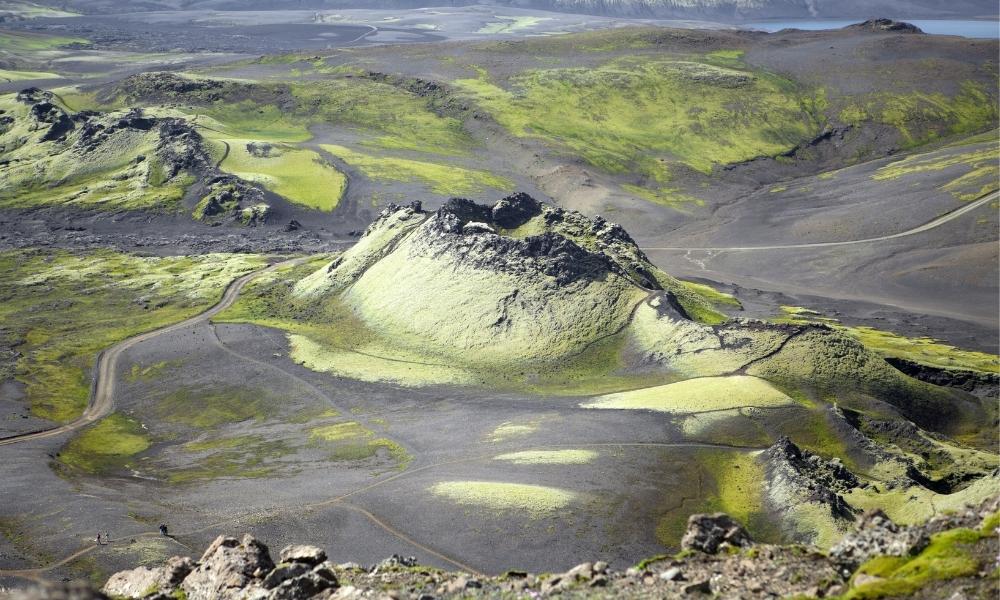
Drohnen-Luftaufnahme der Leirhnjúkur-Lavafelder im Krafla-Vulkansystem in Nordisland, die weite schwarze Lavaströme, geothermische Quellen und vulkanisches Terrain zeigt, das während der Krafla-Feuer geformt wurde.
Fazit
Die Krafla ist eines der wichtigsten Vulkansysteme der Erde, um zu verstehen, wie die Geologie Islands und die globale Plattentektonik funktionieren. Hier erlebten Wissenschaftler mithilfe moderner Instrumente das Plattenwachstum in Echtzeit, als Magma während der Krafla-Feuer immer wieder die Erdkruste aufriss. Das System zeigte, dass Islands Riftzonen episodisch aktiv sein können, wobei Jahrhunderte der Ruhe durch dramatische Schübe vulkanischer und tektonischer Aktivität unterbrochen werden.
Heute helfen die an der Krafla gewonnenen Erkenntnisse den Wissenschaftlern, die anhaltenden Eruptionen und Gangintrusionen bei Svartsengi sowie zukünftige Ereignisse auf der gesamten Halbinsel Reykjanes zu deuten. Die Ähnlichkeiten zwischen diesen Ereignissen deuten darauf hin, dass Island möglicherweise erneut in eine längere Phase des Riftings und des Spaltvulkanismus eintritt.
Gleichzeitig repräsentiert die Krafla die absolute Speerspitze der geothermischen Wissenschaft. Von Bohrlöchern, die versehentlich Lava spieen, bis hin zu Bohrprojekten, die direkt auf Magma stießen – dieser Vulkan hat das Verständnis der Menschheit über die innere Wärme der Erde und die Möglichkeiten der Geothermie neu geprägt.
Kaum ein Ort verkörpert die Identität Islands als ein Land, das aktiv entsteht und in dem aktiv Energie erzeugt wird, so gut wie das Krafla-Vulkansystem. Wenn Sie tief in die Wissenschaft hinter diesem Spaltensystem sowie anderen Spaltensystemen in Island eintauchen und sie mit großen Zentralvulkansystemen vergleichen möchten, ist die Lava Show die erste Adresse, um Fragen zu stellen und mehr zu erfahren.
Erleben Sie echte, flüssige Lava
Die Krafla ist eines der aktivsten und am besten erforschten Vulkansysteme Islands, berühmt für ihre dramatischen Eruptionen, dampfenden Geothermielandschaften und spektakulären Lavafelder. Während die Erkundung der Krafla die dauerhaften Auswirkungen vulkanischer Aktivität offenbart, können Sie bei der Lava Show den Prozess selbst hautnah miterleben. Beobachten Sie aus sicherer Entfernung, wie echte, geschmolzene Lava nur wenige Meter von Ihnen entfernt fließt, und spüren Sie die Hitze, den Klang und die Bewegung einer der außergewöhnlichsten Kräfte der Natur.
Planen Sie Ihren Besuch:
Erleben Sie die Lava Show Reykjavík – Sehen Sie echte, geschmolzene Lava in Islands Hauptstadt fließen.
Erleben Sie die Lava Show Vík – Erleben Sie die weltweit einzige Live-Lava-Show an der Südküste Islands.
Hören Sie den Lava Academy Podcast
Entdecken Sie den Lava Academy Podcast, in dem Sie tiefgründige Gespräche über die wunderbare Welt der Geologie, Vulkane und natürlich der Lava erwarten!
Dieser Artikel wurde von der Geologin Jessica Poteet verfasst. Hören Sie auch das Interview mit ihr im Lava Academy Podcast.